9931
Trees Planted

By: Cynthia B. Lauer
April 2026
Canadians are rightfully proud of our national forests. Occupying 367 million hectares or almost 35% of the land mass, Canada ranks third on the list of the most forested countries in the world by area. Forests are a significant feature of the national environment. They are crucial for biodiversity, carbon storage, water filtration, industry, employment, cultural identity, and recreation
But we can’t be complacent. Our native trees are threatened. Unwelcome insects are infecting the aspens, fir, spruce, hemlocks, and pines that make up a large proportion of Canadian forests from coast to coast. Other trees— ashes, beeches, elms, and oaks—are affected by invasive species, fungi, or combinations of pathogens and vectors.
Whether on public or private land, tree diseases are producing permanent changes to our urban and rural landscapes.
The emerald ash borer (EAB) is of particular concern. The beetle is found throughout the eastern North American range of ash including southern Ontario and Quebec, isolated locations in Atlantic Canada and, as of 2024, the cities of Winnipeg and Vancouver.
Ash trees provide shelter and food for wildlife. Large trees often form spacious trunk cavities that are used as nesting sites by squirrels and various birds, often woodpeckers, wood ducks, and owls. Seeds are eaten by birds and small mammals; foliage is browsed by deer; and bark is occasionally chewed by beaver and porcupine. Ashes also serve as host plants to numerous insects. Their destruction by the emerald ash borer has a cascading effect on the environment.
How EAB is Spread- Likely arriving in North America on wood packaging materials in the early 1990s, EAB was first detected near Detroit and Windsor in 2002. The beetle has spread rapidly since then. Infested material and adult beetles are transported by vehicles over long distances. Spread is also aided by movement of nursery stock, logs, and firewood. Regulations have been implemented to restrict the movement of these wood products out of infested areas.
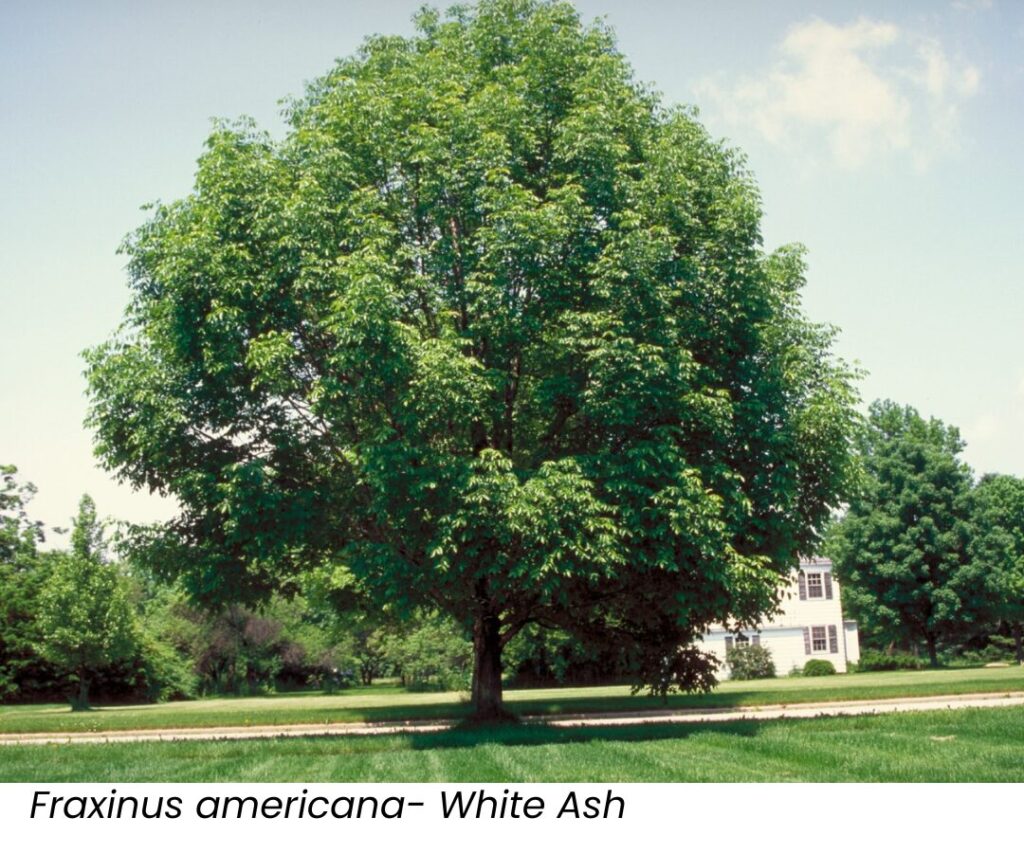
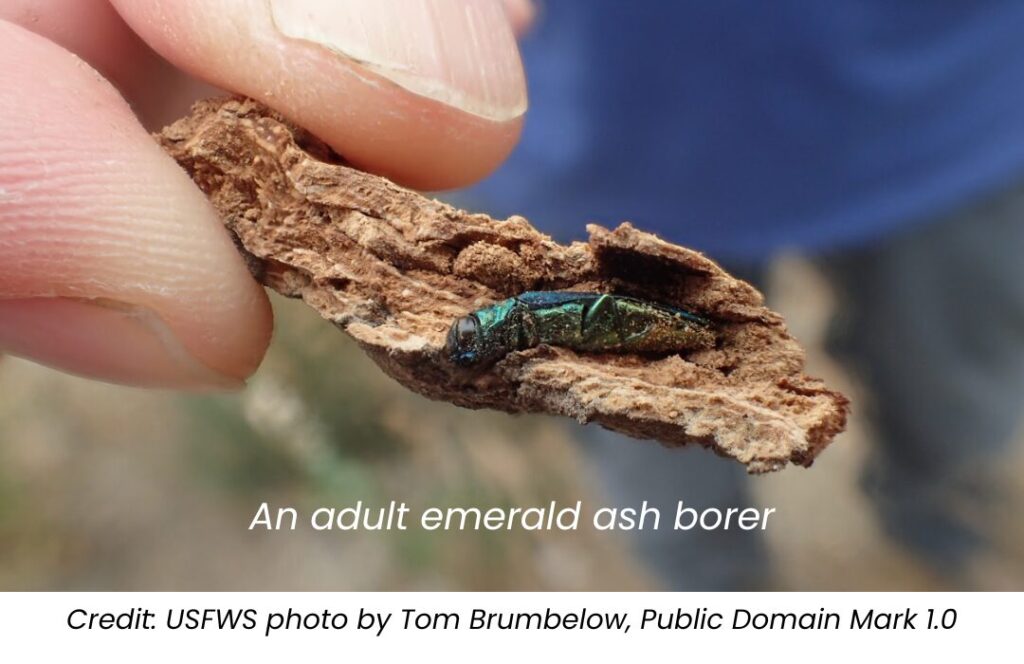
EAB Features– Emerald ash borer is one of the first introduced insects to threaten an entire group of native trees in North America. The outcome is similar to chestnut blight and Dutch elm disease. A species of metallic wood-boring beetle native to East Asia, EAB is named for its bright, iridescent colour. North American ash trees are very vulnerable to this beetle which has killed millions of trees in Canada. All species of ash are susceptible: green ash (Fraxinus pennsylvanica), white ash (F. americana), and black ash (F. nigra) are the most vulnerable while blue ash (F. quadrangulata) appears to be the most resistant.
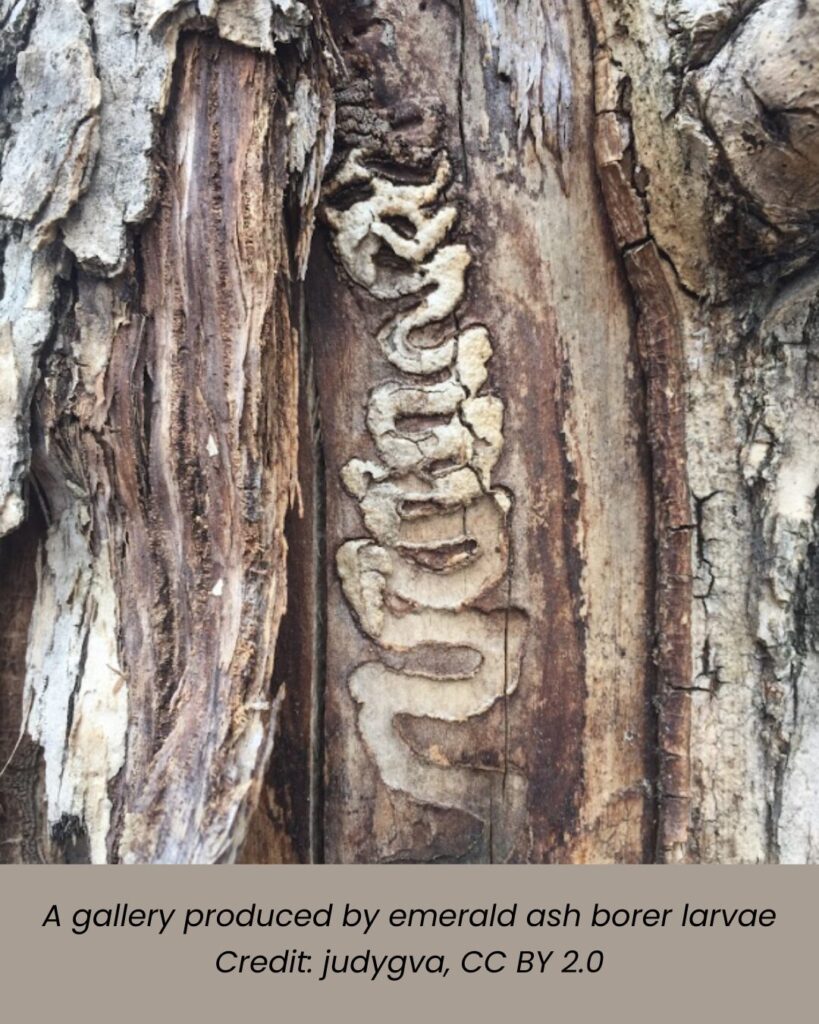
At 8 to 14 millimetres long, EAB adults are relatively large but since they concentrate on the upper canopy of the tree, they are hard to see. Adults cause only minor damage to ash trees by feeding on foliage. It is the larvae that are responsible for the death of a tree. Swarming through the inner bark, they leave behind serpentine pathways known as galleries that disrupt water and nutrient transport. Eventually, the bark is girdled by these passages. Leaves on infested branches turn yellow and branch dieback follows. As the infestation intensifies, vertical cracks develop in the bark. Once weakened, the attacks intensify. Large individual trees will die after three to four years; young trees can succumb in a single year.
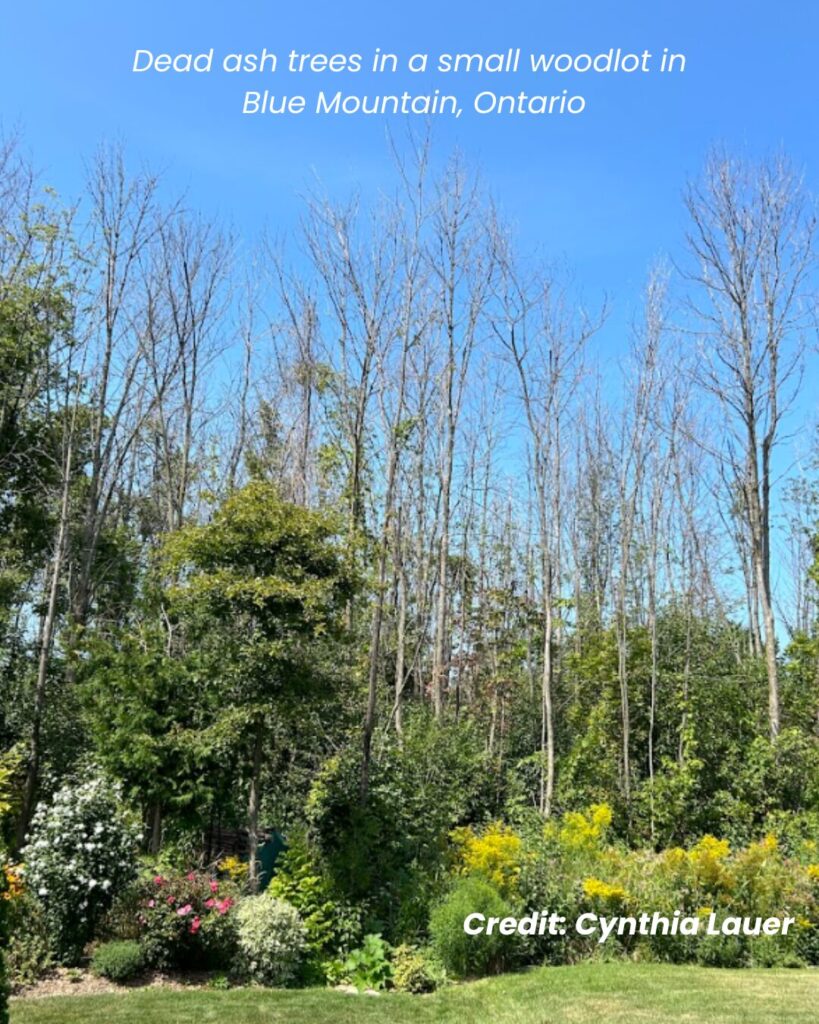
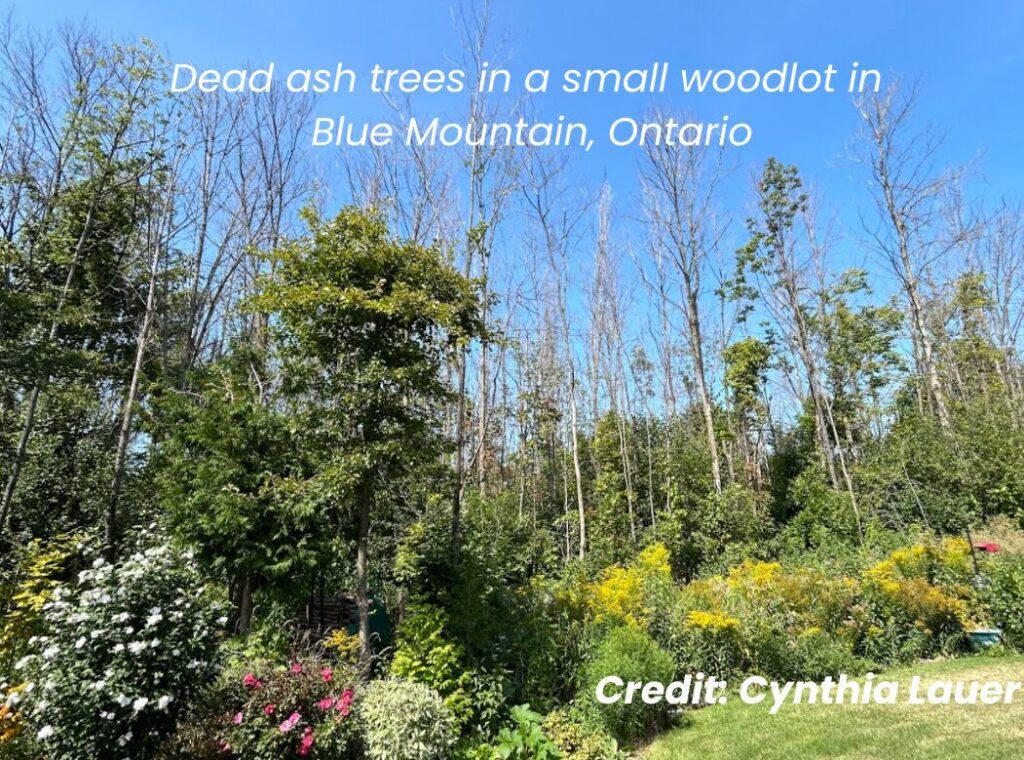
EAB can be detected by the D-shaped holes in the outer bark created by new adults emerging from the tree. Peeling back the bark will reveal distinctive larval galleries. Sometimes woodpeckers detect this abundant larval food source. But no North American natural predators whether birds, other insects or parasites have been able to slow the spread of EAB. Once the beetle arrives in an area, up to 99% of all ash trees are killed within eight to ten years.
Effects of EAB– EAB infestations cause significant ecological and economic impacts on forested and urban habitats. In forests, biodiversity is severely compromised when ash trees die affecting natural forest succession and nutrient cycling. Habitats also become more vulnerable to invasion by introduced plants. After an infestation, remaining beetles can kill new growth, jeopardizing forest recovery.
In urban areas, infestations have killed tens of thousands of ash trees planted in parks and along streets. Municipalities are responsible for removing dead ash trees on urban land but, as I learned, they may only remove fallen trees. Ash trees that are affected should be chemically treated or removed and replaced which can be a significant economic burden.
Canadian Innovations in Controlling EAB– Canadian innovators have been key contributors to research on technologies and development of products to control Emerald Ash Borer.
Dr. Peter Silk at the Atlantic Forestry Centre in Fredericton synthesized the insect’s pheromone. Developed into a lure and positioned in the mid to upper tree canopy, it functions as an effective trap device. The product is commercially available and in use across North America. Research has also led to the introduction of a biological control in the form of parasitic wasps from the emerald ash borer’s native range in China and Russia. The wasps insert their eggs directly into emerald ash borer larvae. As the wasp larvae grow, they consume the beetle larvae.
Another wasp species attacks the eggs of EAB. The technique has a success rate of over 50% in some areas in North America. Scientists have reported that these parasitoid wasps are spreading quickly across the landscape.
Researchers expect that these biocontrol insects will eventually be present throughout the entire Great Lakes region. Dr. Krista Ryall of the Great Lakes Forestry Centre in Sault Ste. Marie believes that biocontrol may be the only long-term and sustainable option for managing EAB.
At the Laurentian Forestry Centre in Quebec City, Dr. Robert Lavallée has conducted some very successful research on an alternative to synthetic pesticides: naturally occurring pathogenic fungi. Spores from these fungi are added to traps. When an adult EAB enters the trap, it is exposed to lethal spores and later transmits them to its mates. The infected beetles die within days.
A final control method is the trademarked product, TreeAzin developed by Canada Forestry Service and BioForest Technologies Inc. Derived from oil in the seeds of the neem tree, the product is injected into the tree. Commercially available and in use by numerous municipalities and tree care companies, the product is one component of a management strategy for the emerald ash borer.
With the widespread use of these successful technologies, ash trees will hopefully stand a chance against this devastatingly harmful insect. We all look forward to a time when ash trees thrive again in our forests and parks.
A Living Green Barrie volunteer since 2025, Cynthia Lauer, PhD is a member of Simcoe County Master Gardeners and a regular contributor to The Gardener magazine. Her work is AI-free.