9931
Trees Planted

By Cynthia B. Lauer
April 2026
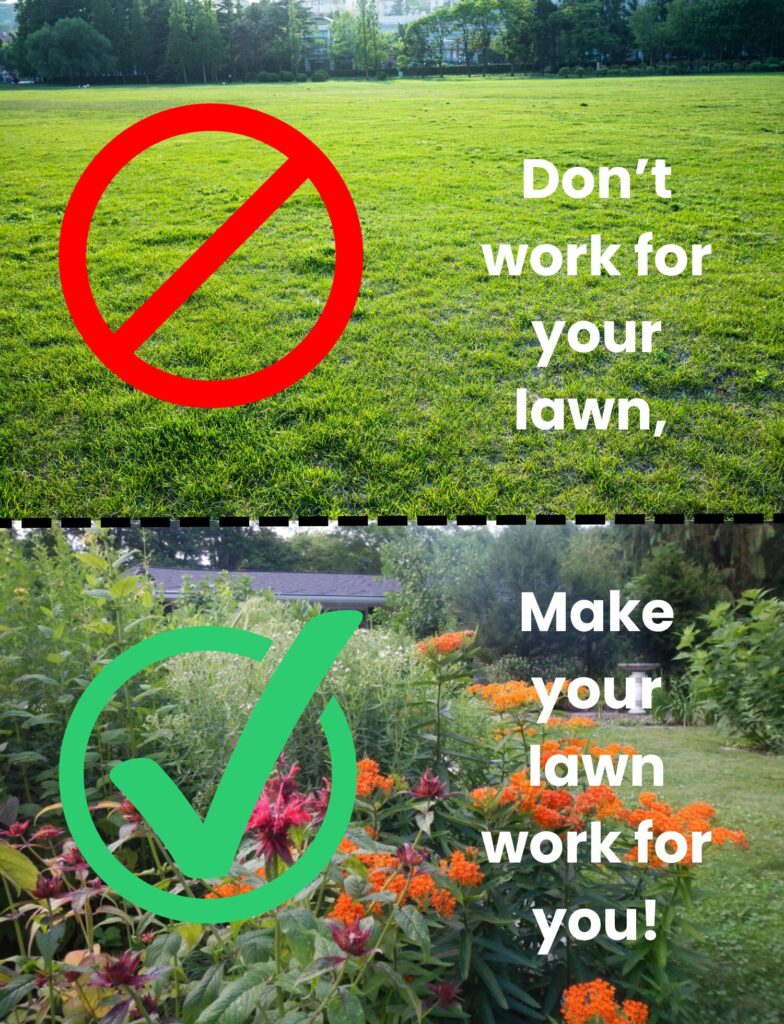
It’s April. This month, Living Green Barrie’s 12 Actions for Climate focuses on naturalizing your surroundings. In this article, I’ll review all of the reasons why you should reduce your lawn. This action may sound like a bigger change to your landscaping than you would plan. But reducing the lawn may be the single-most important thing homeowners can do to support the environment. It turns your property from an environmental dead zone to one that actively supports hundreds of species of insects, birds, and other creatures.
Lawns dominate the residential landscape. The rich green found in the standard blend of Kentucky bluegrass (Poa pratensis), fescues (Festuca spp.), and perennial rye grass (Lolium perenne) serves as an outdoor carpet in urban backyards or public parks. Turfgrass welcomes the heavy foot traffic of picnicking, playing, and walking.
Renowned environmentalist and entomologist, Doug Tallamy, found that 92% of suburban landscaped plantings in the US consists of turfgrass. It covers an estimated 163,800 square kilometers (over 40 million acres) of space in the US including parks and golf courses. That’s roughly the combined areas of Maine, New Hampshire, Vermont and Massachusetts. While we don’t have figures for turfgrass coverage in Canada, Statistics Canada publishes some relevant information. In 2021, two-thirds of Canadian households have lawns and there are 6.2 million laws across the country. Our situation generally parallels the US.
Turfgrass is a ubiquitous and traditional groundcover that comes with a long list of concerns. It requires more maintenance than many people are able to provide. Irrigation, mowing, fertilizing, weeding, aerating, de-thatching, re-seeding and top-dressing are required for a lawn to look its best. For those starting with sod, a topsoil depth of 15–20 cm is needed. Hard expenditures of time, labour, and cash are necessary to ensure optimal benefits.
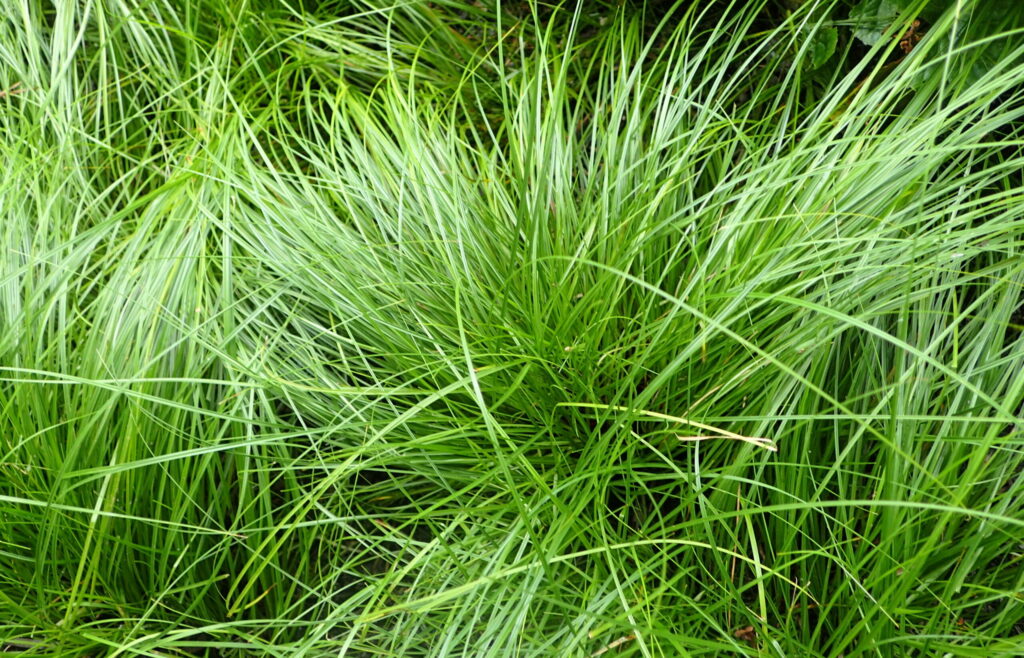
In Canada, turfgrass species are cool-season plants that enter a natural dormant period in the middle of summer. As they brown out, they lose their appeal. This is just one reason why homeowners choose to renovate their lawn. Other reasons are poor fertilization, shallow soil, inadequate drainage, and damage from excessive traffic, weed invasion, excessive shade, dog urine, compaction, or drought. Turf is also vulnerable to insects such as chinch bug, sod webworms, white grub larvae, and crane fly larvae.
Coaxing maximum performance from a lawn all season long requires a declaration of war on these chronic threats.
Let’s talk about fertilizer.
To attain lush, fertile, green lawns, homeowners use about three million tons of nitrogen-based fertilizers every year. David Wolfe, a professor of plant and soil ecology at Cornell University, notes that for every ton of nitrogen in fertilizer, four or five tons of carbon are added to the atmosphere. A full 40–60% of nitrogen from fertilizers runs off into surface and groundwater. This exacerbates the problem of contaminated runoff after extreme weather events.
Watering is another problem.
On hot days, turfgrass may need up to three light waterings every day to ensure that moisture penetrates the soil to a depth of 4 inches. A Scientific American blog posts that in 2017, lawns in the US required the equivalent of 200 gallons of drinking water per person per day. The National Resources Defence Council reports that this adds up to 3 trillion gallons of water a year. The unsustainable risks range from a depletion of water aquifers to the devastation of local ecosystems. While research is based on US data, it is instructive for Canadian gardeners where the love of lawns is alive and well.
Grooming the lawn
requires machinery powered by fossil fuels. A Princeton Student Climate Initiative found that a four-stroke lawnmower operating for one hour burns the same amount of fuel as a vehicle traveling for five hundred miles. The two-stroke engines of many leaf-blowers pose a unique environmental hazard because they do not have an independent lubricant system; they mix oil and fuel. Since about 30% of the fuel does not combust completely, these engines release toxic gases into the air. This is how lawn maintenance contributes to rising carbon dioxide emissions.
Climate change demands that we become responsible environmental stewards. There is no justification for the interventions we make to maintain a nice lawn.
There is another reason for reducing turfgrass. Simply put, lawns are unnatural. Growing in a soil raked of the rich humus of decaying matter, lawns are a sterile monoculture. They occupy vast expanses of land that contribute nothing to the ecosystem.
Turfgrass provides neither food nor nesting sites for insects. Dedicating masses of outdoor space to lawn means less support for insects. As pollinators, insects are crucial for ensuring the reproduction of plants. And they are of irreplaceable importance in the food chain. The failure of lawns to support insect life has a direct and significant impact on birds.
A study published in Cornell University’s Science News confirms a known or suspected decline of 48% of existing bird species worldwide. According to Doug Tallamy, plants in private gardens “make or break bird reproduction”. In his book, Nature’s Best Hope, he points out that a full 96% of North America’s terrestrial bird species rear their young on insects, not seeds and berries.
Lawns exist to satisfy people. They do nothing for other species.
In the concluding chapter to his book, Tallamy advises individual gardeners on what they can do to make a positive difference to the environment. “Shrink the lawn” is the first item on the list.
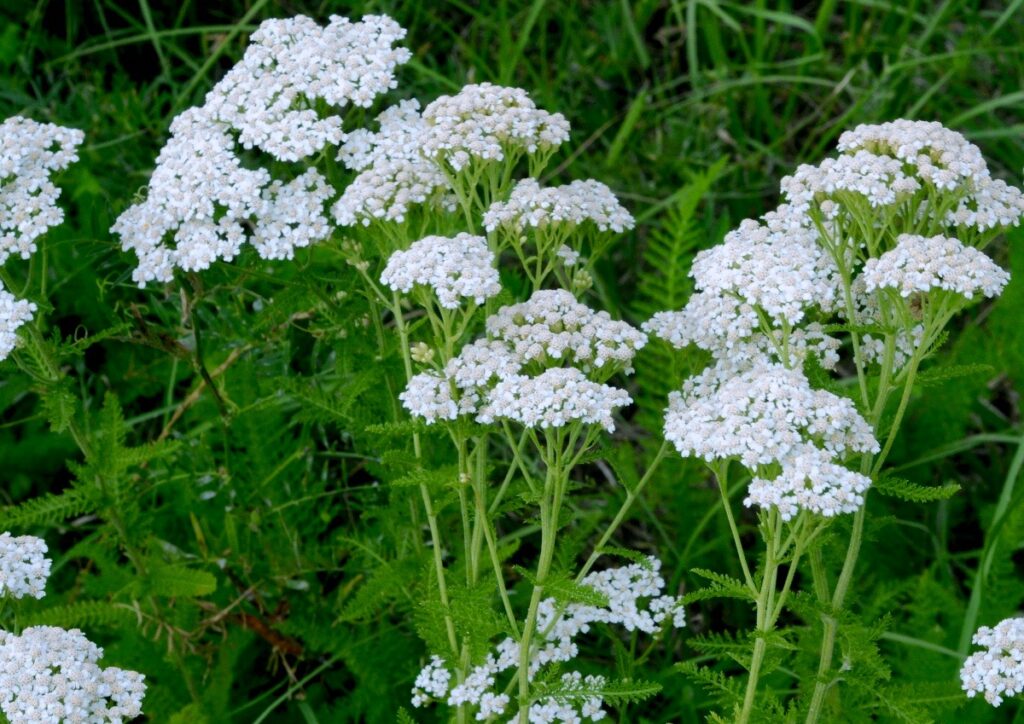
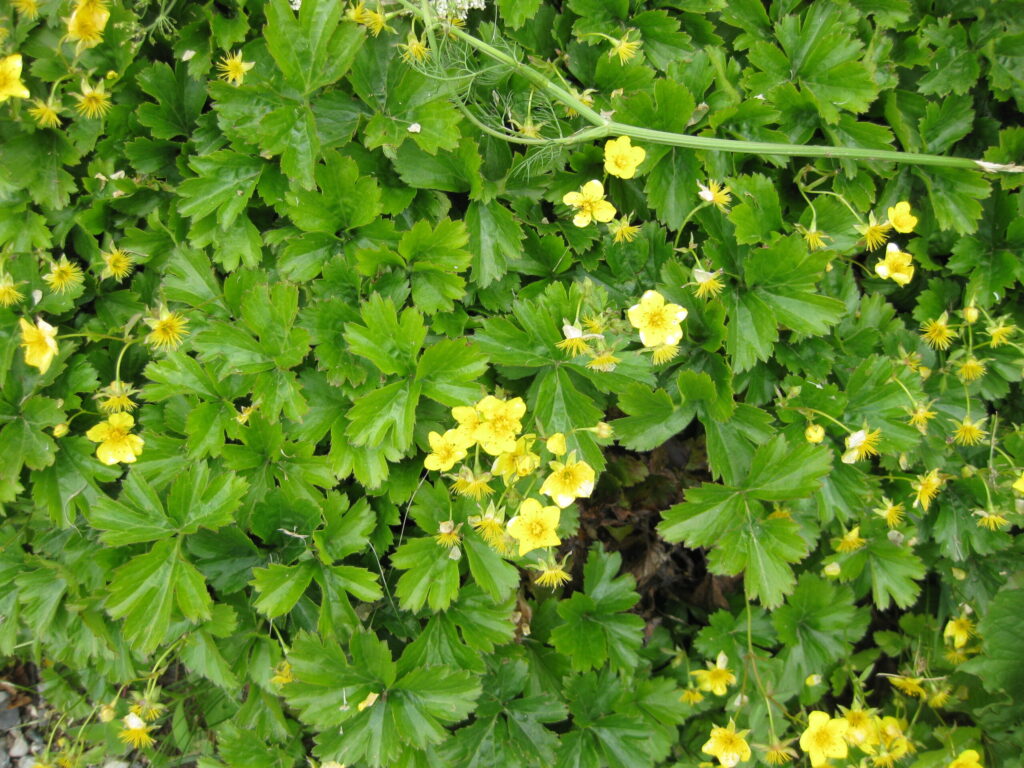
Many gardeners are stepping up and replacing turfgrass with native groundcovers. Attractive, sustainable, and cost-effective, these plants not only solve the multiple problems of maintaining turfgrass, they also make a positive and significant contribution to the environment by supporting native bees, butterflies, moths, beetles, flies, and other insects. Native plants provide food sources and habitat for nesting and overwintering of insects, birds, and mammals.
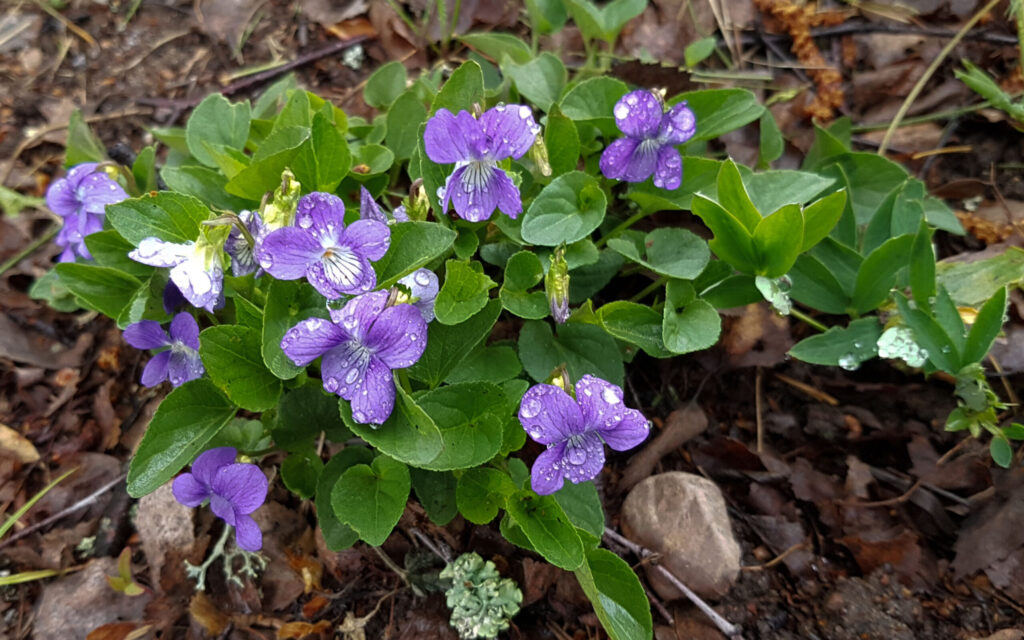
Here’s a list of 37 groundcovers that do a great job of replacing lawn. I have grown 25 of these species and have seen almost all of them in one place or another. I enthusiastically recommend each and every one on the list. The list isn’t exhaustive; other native groundcovers are out there for you to discover. (While popular as turfgrass replacements, clover and thyme are excluded because they are not native species.)
These plants vary a great deal in height, spread, and bloom time. Check the details for each to ensure you choose the ones that are best for your space. Make your choice as wide as possible. Going for diversity ensures that more insects will make it their home.
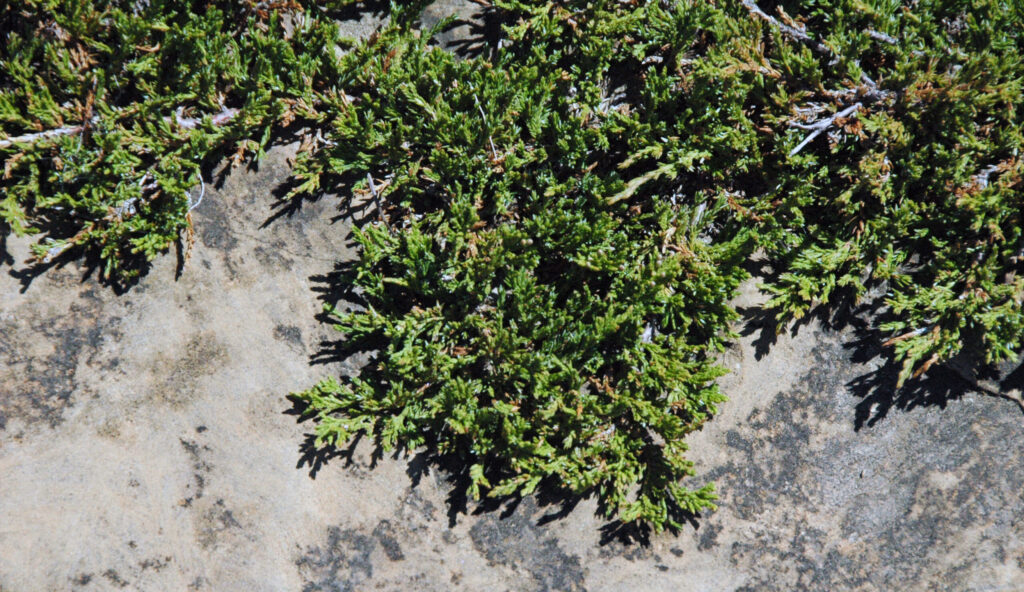
For Sun
For Shade
For Sun or Shade
Author bio: A Living Green Barrie volunteer since 2025, Cynthia Lauer, PhD is a member of Simcoe County Master Gardeners and a regular contributor to The Gardener magazine.