9931
Trees Planted

By Cynthoa Lauer
It’s October. This month, Living Green Barrie’s 12 Actions for Climate focuses on planting better trees.
Living Green Barrie’s May action was ‘Plant Trees’. That month, I described a lot of the popular trees for sale at Living Green Barrie: black cherry, black walnut, bur oak, hemlock, northern catalpa, pin oak, quaking aspen, red maple, red oak, sugar maple, tamarack, white birch, white cedar, white oak, white pine, and white spruce.
This month, I focus on a few other trees that Living Green carries. Less common but no less valuable (and attractive), these native trees offer all of the benefits that the more common species do. I hope my tree profiles persuade you to plant as many as you can accommodate on your own property.
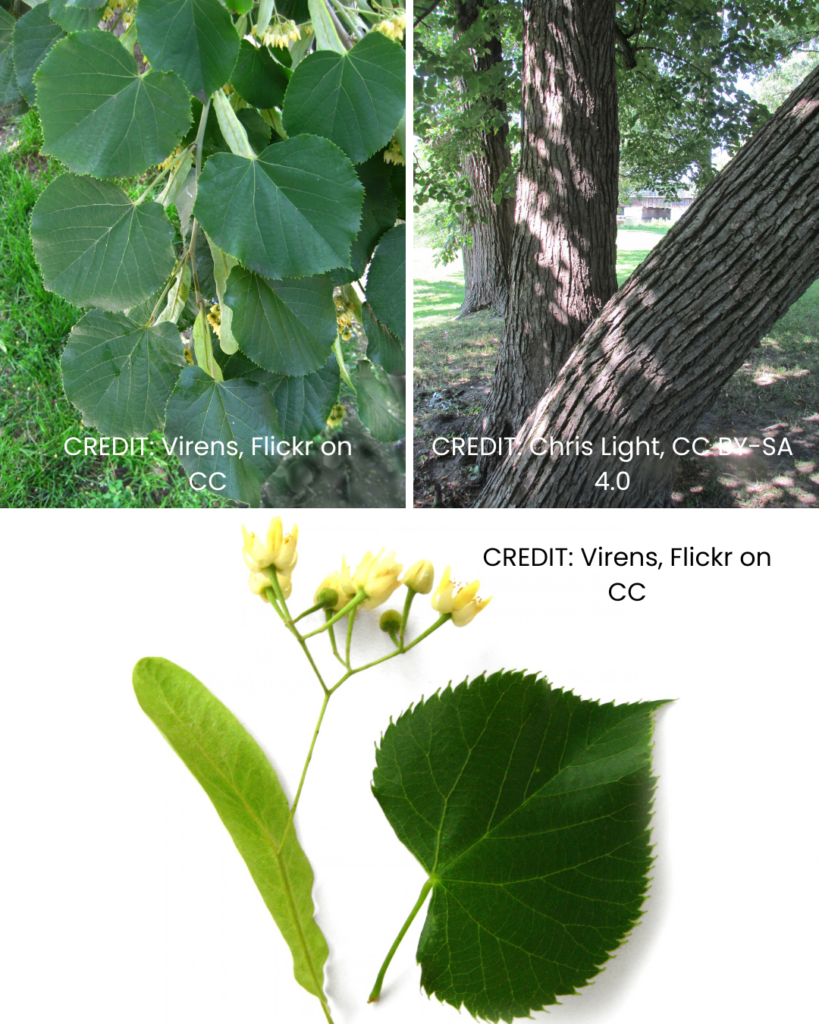
American Basswood (Tilia americana) is native to QU, ON, and MN where it can be found in cool, moist woods, often near water. Fast-growing and ornamental, this tree is famous for its heavenly-scented flowers that are used to make linden tea. Reaching a mature height of 15–30 m, it can live to an age of 200 years. A very hardy tree, basswood grows in Canadian zones 3a–7b. Grown in sun to part shade, it tolerates most soils. Pruning is only necessary to accommodate pedestrians or vehicles or to remove suckers at the trunk. White flowers in early summer give way in the fall to brown, woolly fruit capsules that persist through the winter. Basswood is a high-quality nectar source for bumblebees, small sweat bees, and wildlife; flowers attract nocturnal moths. It is a larval host for eastern tiger swallowtail and mourning cloak butterflies as well as for many moth species. The tree provides forage for mammals and birds, and is used as a nesting site for birds. It contributes to air quality, soil enrichment, and carbon sequestration. Plant it as an accent, ornamental, or woodland tree but not where it may be subjected to soil compaction or road salt.
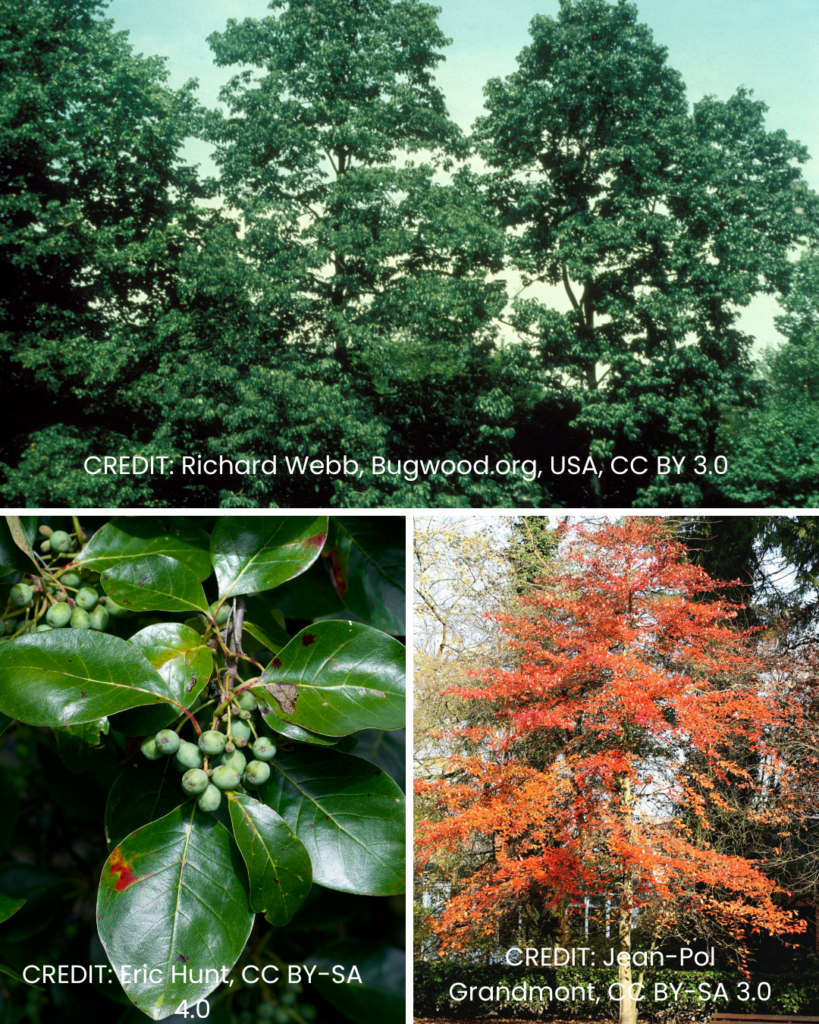
Blackgum (Nyssa sylvatica) is a rare Ontario tree whose colours are startlingly beautiful in the fall. A member of the dogwood family, it usually grows in wet, lowland sites or sometimes in uplands with a shallow water table. Growing slowly to 20 m high, it is hardy to Canadian zone 4 and is very long lived; it can reach 650 years in age. In the garden, it prefers full sun but it’s adaptable to all soils except for alkaline soils. It can be sensitive to poor draining, standing water, drought, and pollution. Although the white flowers are inconspicuous, they are an excellent source of nectar for bees. Blue-black plum-like fruits grow abundantly in clusters and mature in the fall. Over thirty bird species eat the fruits and leaves. Foxes, raccoons, and opossums also eat the oil-rich fruit. The tree’s hollows serve as habitat for owls and small mammals. Blackgum works well in the woodland, along fence lines, as an accent or ornamental tree, and for erosion control.
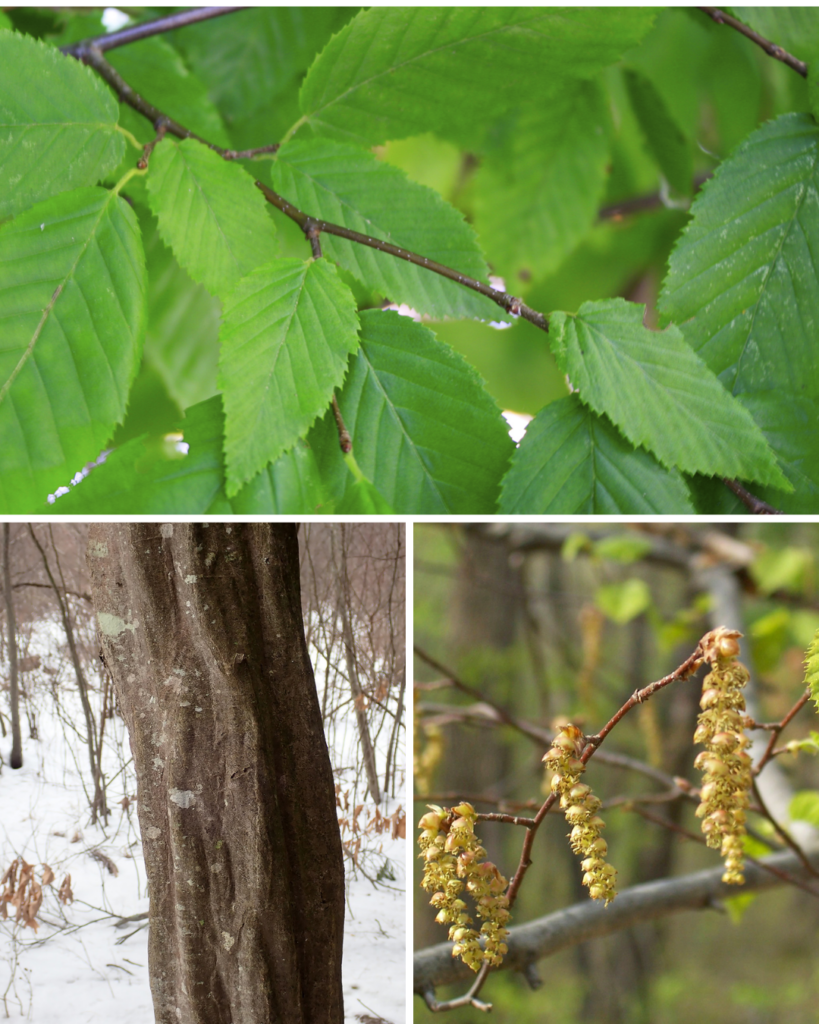
Blue-Beech (Carpinus caroliniana) grows naturally in Ontario and Quebec in Canadian hardiness zones 3–7. Even though this tree goes by other common names, among them musclewood, American hornbeam, and ironwood, it is different from a beech (Fagus spp) and a hop hornbeam (Ostrya virginiana). This relatively small ornamental tree is meant for the understory. Round and bushy, blue-beech grows 4–9 m tall with zigzagged branches that grow to form flat sprays. Besides its manageable size, the outstanding feature of this tree is the fruit that hangs in 10–15 cm long clusters and, to my eye, look like dainty origami decorations. Its fall colour is yellow to red. The tree is a larval host for dozens of moth species, and birds and squirrels eat the buds, flower clusters and seeds. The flowers are wind-pollinated. I loved my first blue-beech so much that when I moved house, I made sure to plant another one in my new garden. While it prefers rich, moist soil, this tree does fine in the sandy soil so prevalent in my region.
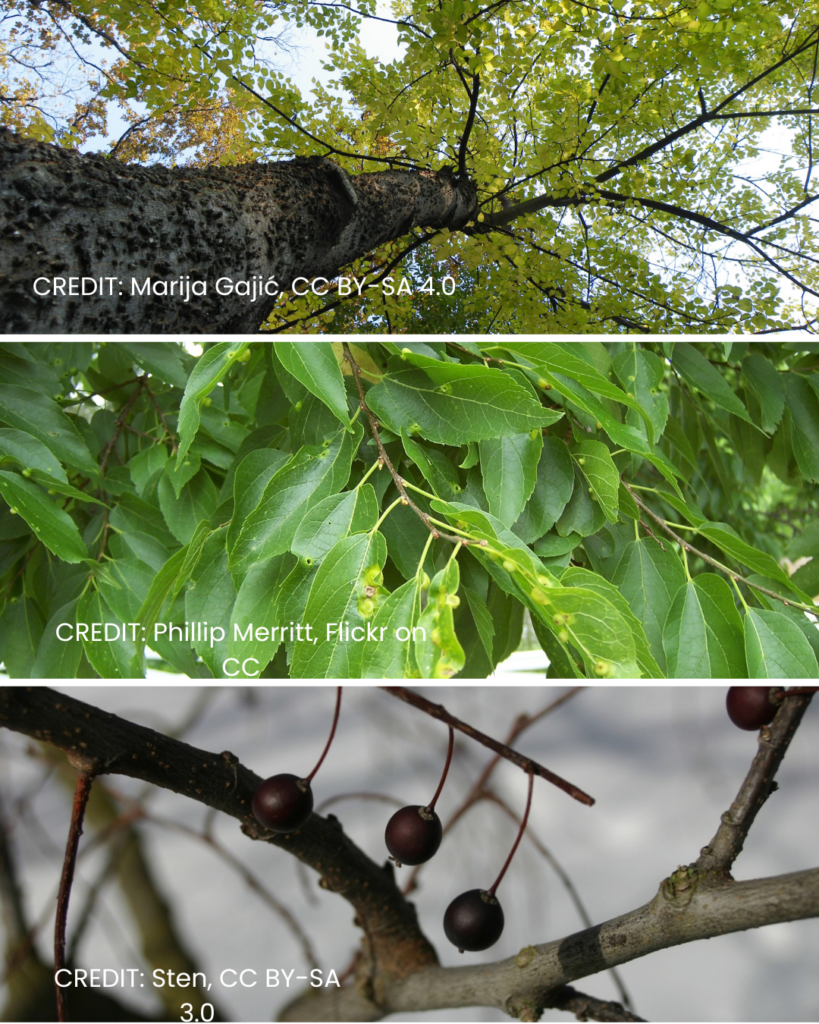
Hackberry (Celtis occidentalis) belongs to the hemp family and grows naturally in QU, ON, and MN in rocky hills and sandy dunes in a variety of soils including limestone and flood plains. Its yellow fall foliage is unremarkable. Fast-growing to 15 m high, hackberry features a unique corky bark. Hardy to zone 2, it can live for 200 years. Plant it in full sun in dryish, average to moist soil. It tolerates pollution, drought, compacted soil, and road salt. Maintenance pruning is optional for structure and clearance and the removal of witches’ broom is optional. Yellowish-green flowers in mid-spring produce reddish berry-like fruits that often persist over winter. Hackberry makes significant contributions to the environment as a larval host for mourning cloak, question mark, eastern comma, hackberry emperor, tawny emperor and American snout butterflies, as well as for a long list of moths including the ruddy dagger, thin-lined owlet, and banded tussock. Its berries are an important food source for many species of wintering birds, game birds and small mammals. Songbirds use it as a nesting site. Plant it at the roadside, boulevard, or as an accent or ornamental tree. Dwarf hackberry (C. tenuifolia) is a small multi-stemmed tree that may be another option for those with smaller properties. I’m very happy to have one of each.
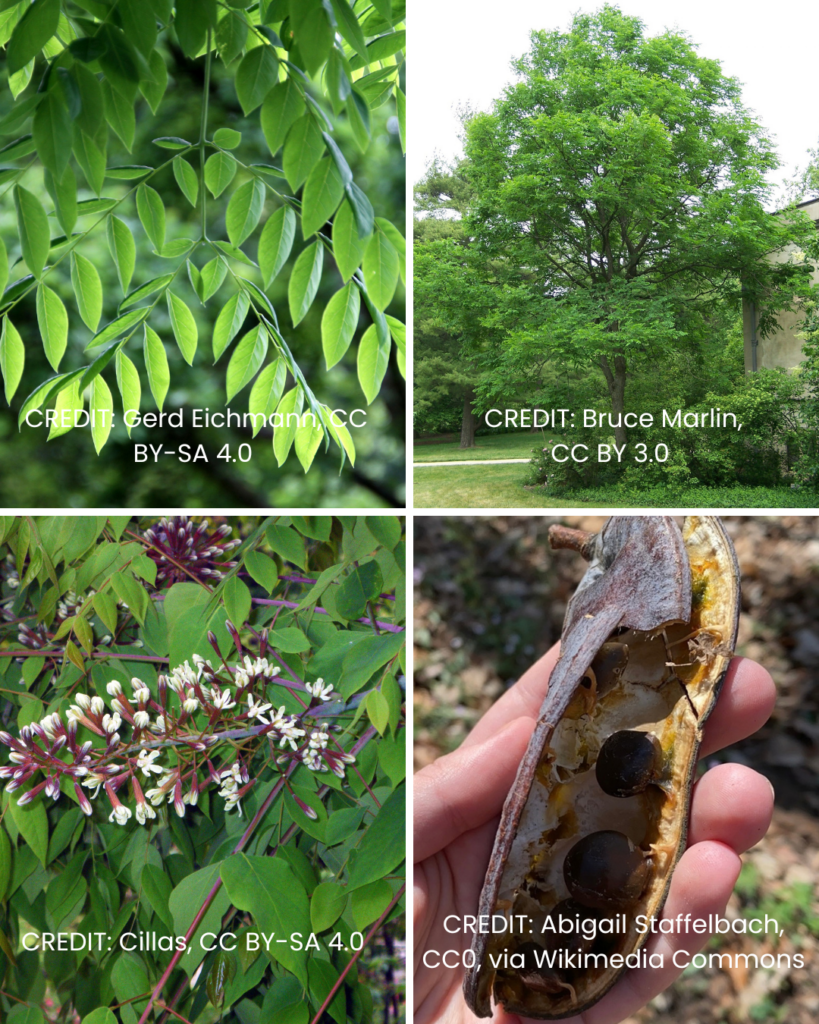
Kentucky Coffee Tree (Gymnocladus dioicus) is a member of the pea family. It can be found across the province in moist woods with deep, rich soil. Its outstanding feature is its large seed pods that look like dried brown bananas; they are weird and wacky and part of the tree’s appeal. Its compound leaves are also unique. They are twice pinnately divided and are by far the largest of any native tree in Canada. Kentucky coffee tree leafs out in late spring and drops its leaves in early fall. Fall foliage is yellow. Slow-growing to 23 m in height, its lifespan is 75 years. It is hardy to zone 3. Preferring sun to part shade, it is adaptable to all soils and tolerates urban conditions, drought, road salt, and compacted soil. The flowers are panicles that attract bumblebees to its nectar and pollen. The tree is a larval host for several moth species. As a legume, it contributes to soil health. Plant it on the boulevard or as an accent tree. Note that eaten raw, Kentucky coffee tree seeds are toxic.
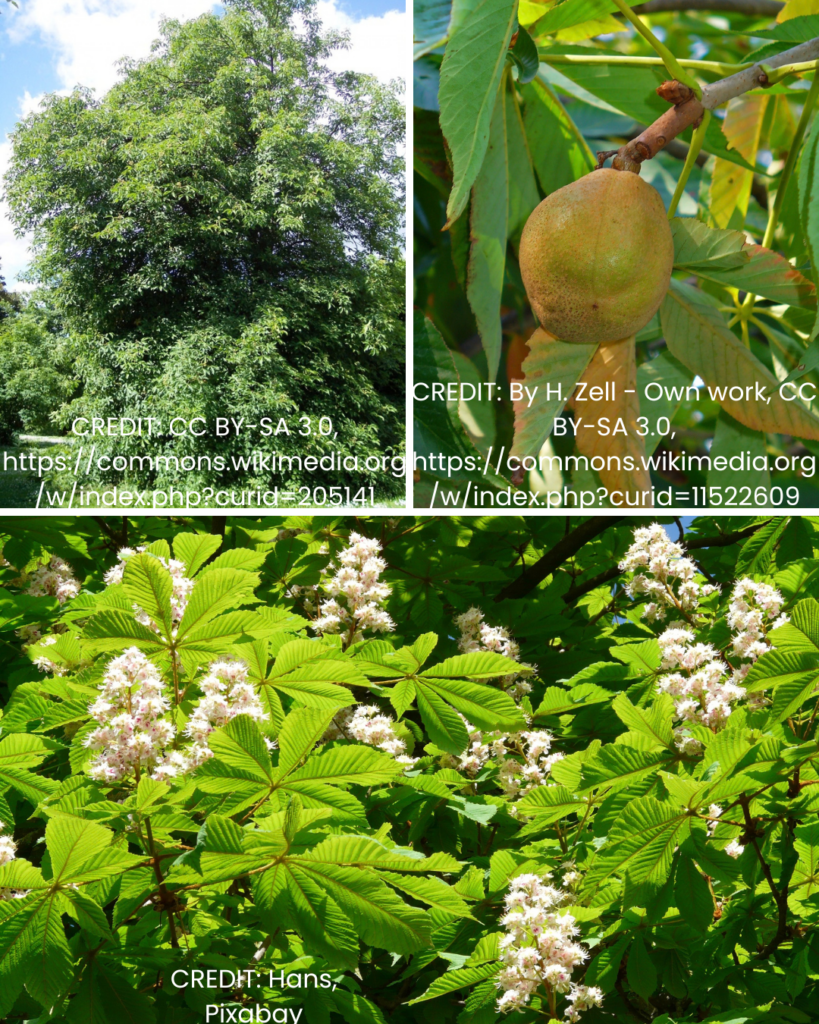
Ohio Buckeye (Aesculus glabra) is found across Ontario, growing naturally on rich, well-drained sites including floodplains. A slow-growing shade tree, its leaves are palmate in shape and its fall foliage is yellow-orange. Relatively disease- and insect-free, its fruits are seldom harvested by wildlife. Reaching 15 m in height, it can live for 80 years. Preferring sun to part shade, it grows well in poor soil in hardiness zones 2b to 6b. It tolerates urban conditions, shade, and all soils. Its showy flowers are a greenish-yellow panicle with bright red or orange markings that attract pollinators. Bumblebees are the most common visitor for pollen while other bees, butterflies and hummingbirds consume the nectar. The tree produces fruit in the form of a brown nut encased in a light spiny husk that drop in early fall. Ohio buckeye serves as a nesting site and cover for birds. Its high phosphorus content contributes to soil health. Plant it along fence lines, or as an accent or ornamental tree. Note that most parts of this tree (including the large seeds) are toxic. When bruised, the leaves and twigs emit an unpleasant smell. Don’t let that bother you; I have two of these beauties.
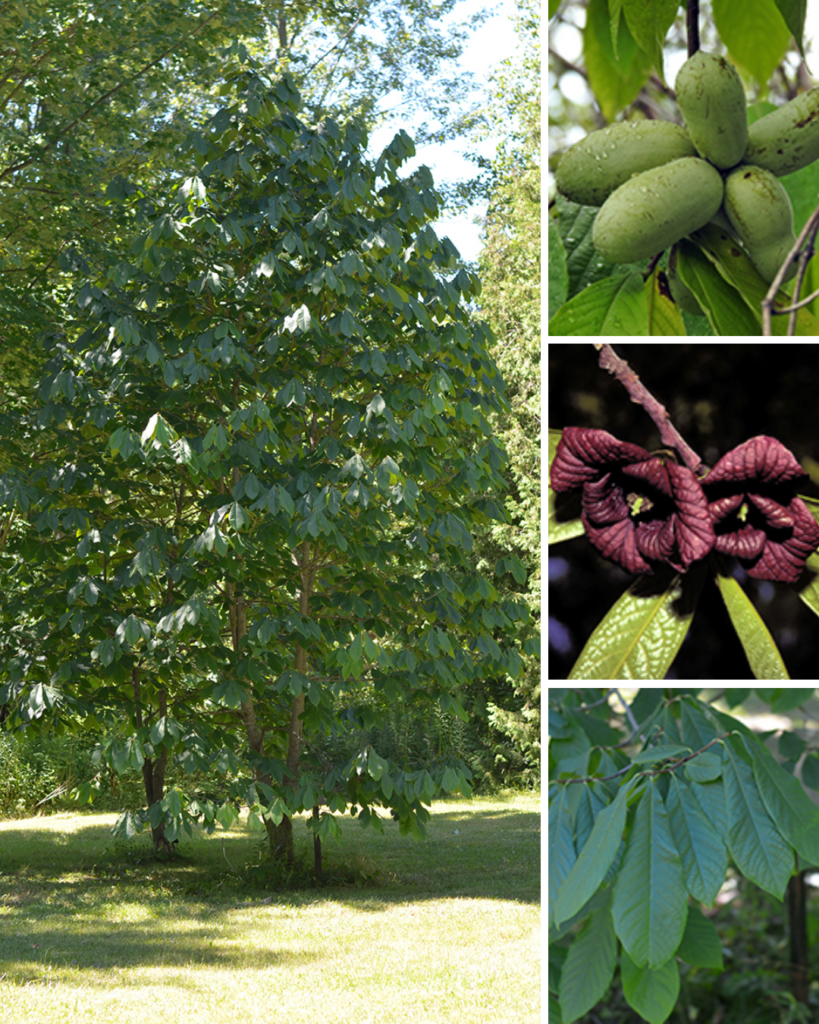
Pawpaw (Asimina triloba) is the northernmost New World representative of a mainly tropical family of trees. Growing to 9 m high, pawpaw is a short-lived tree hardy in zone 5a–5b. Rare in Ontario, the pawpaw is a small deciduous understory tree growing in low bottom woods, wooded slopes, ravines and along streams. It often spreads by root suckers to form thickets. Pawpaw is famous for producing the largest edible fruit of all trees in Canada. In the garden, it seldom sets much fruit without cross pollination from a second tree. Large, edible fruits are oblong like a mango and yellowish green in colour maturing to a dark brown in early autumn; they are tropical in flavour and texture. Flowering in April to May, the cup-shaped blooms are purple. The leaves are large and slightly drooping; the fall foliage is yellow. Pawpaw seedlings and saplings need some shade but mature trees grow in full sun in moist, acidic, fertile soils. Pawpaw tolerates drought once it is established. It also tolerates deer and rabbit browsing but it’s intolerant of wind. Pawpaw is a larval host for the rare zebra swallowtail butterfly and pawpaw sphinx moth (along with other moths). It attracts flies for pollen and nectar. Raccoons, squirrels, opossums and other wildlife eagerly seek out the fruits. Use the pawpaw in a rain garden, on a woodland margin, or along ponds or streams. Since the fruits generally fall to the ground before they are ripe, they have to be ripened at home, and soon; they do not store well.
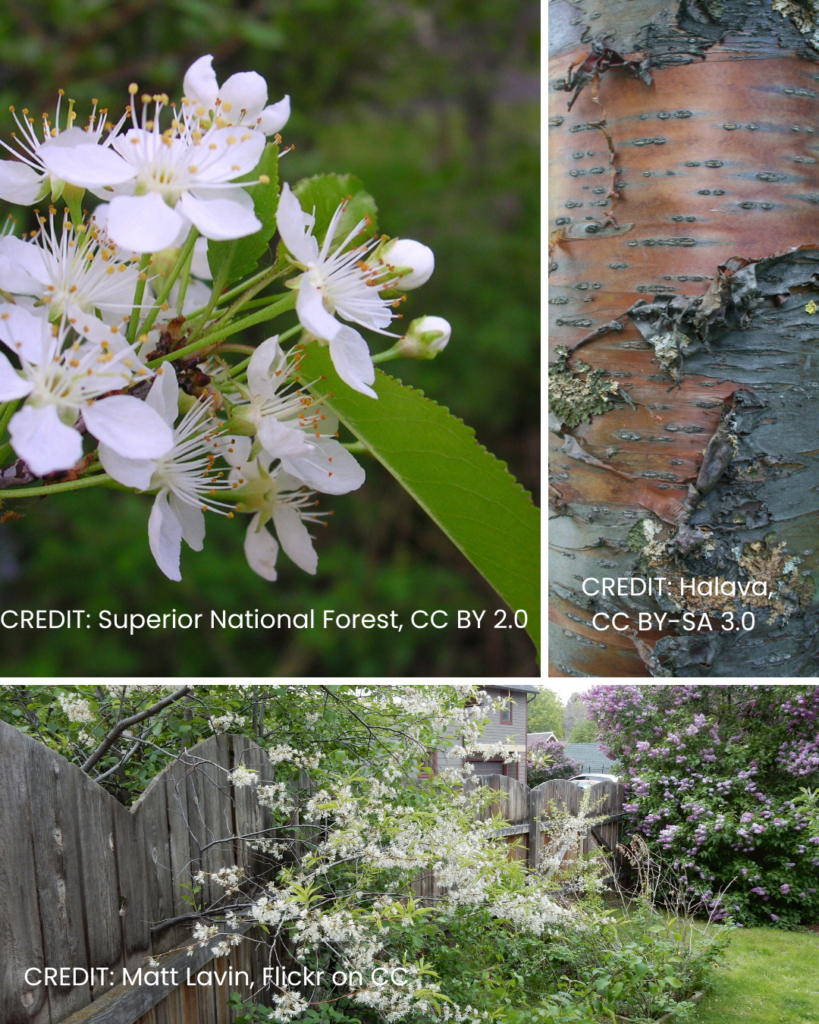
Pin cherry (Prunus pensylvanica) is a member of the rose family. It is found across Canada on open woodlands or recently disturbed sites. Like all cherry trees, it has a shiny reddish bark, fragrant flowers, edible fruit of very high value to wildlife, and good fall colour. Fast-growing to 12 m, it lives for 40 years. Hardy to zone 2, it needs full sun and dry to moist soil although it tolerates poor soil, salt and pollution. If pruning is preferred, carefully remove dead, damaged, diseased branches in late winter or early spring only. White flower clusters in late spring to early summer produce abundant bright red fruit that, for human consumption, are best cooked. Pin cherry supports the pollen specialist bee Andrena fenningeri and it is a larval host for white admiral/red-spotted purple, coral hairstreak and many other butterflies and moths. Its fruits are an important food for songbirds, game birds, and mammals. A pioneer species, pin cherry can be planted for soil stabilization, along fence lines, or as an accent and ornamental tree. Its leaves, bark and cherry stones are toxic. Many cherries are susceptible to black knot fungal disease. A cinch to grow, I watched my newly planted tree gain at least 2’ in height every summer.
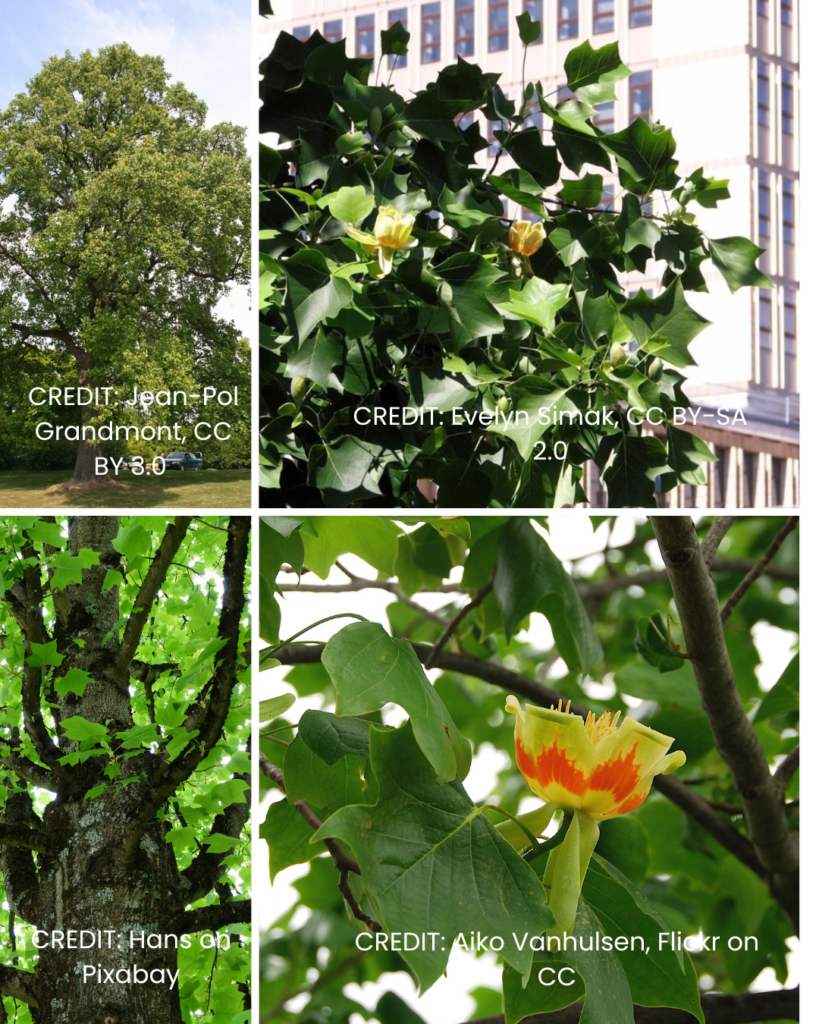
Tulip tree (Liriodendron tulipifera) belongs to the magnolia family and grows throughout Ontario. It likes sun to part sun and deep, rich, moist but well-drained soil. Like the magnolia, tulip tree boasts an unusually showy flower that resembles a tulip. A large tree, it can attain 36 m in height and live for 150 years or more in hardiness zones 4b to 6a. Tolerant of partial shade, wildlife, pests, and disease, tulip tree produces fruit in the form of long-winged samaras in cone-like clusters. A larval host for eastern tiger swallowtail and spicebush swallowtail butterflies, as well as root collar borer, promethea, and other moths, tulip tree attracts bees, flies, and beetles to its pollen and nectar. Quail, finches, cardinals, rabbits, squirrels, mice and deer eat the seeds. This tree is known for its large carbon capture efficiency. It is intolerant of drought and road salt. Plant it along fence lines, or as a large ornamental tree.
Author bio: A Living Green Barrie volunteer since 2025, Cynthia Lauer, PhD is a member of Simcoe County Master Gardeners and a regular contributor to The Gardener magazine. Research resources used for this article include John Laird Farrar’s book, Trees in Canada, Linda Kershaw’s book, Trees of Ontario, Lorraine Johnson’s and Sheila Colla’s, A Garden for the Rusty-Patched Bumblebee, and Heather Holm’s book, Bees: An Identification and Native Plant Forage Guide. Cynthia’s work is AI-free.