9931
Trees Planted

By: Cynthia Lauer
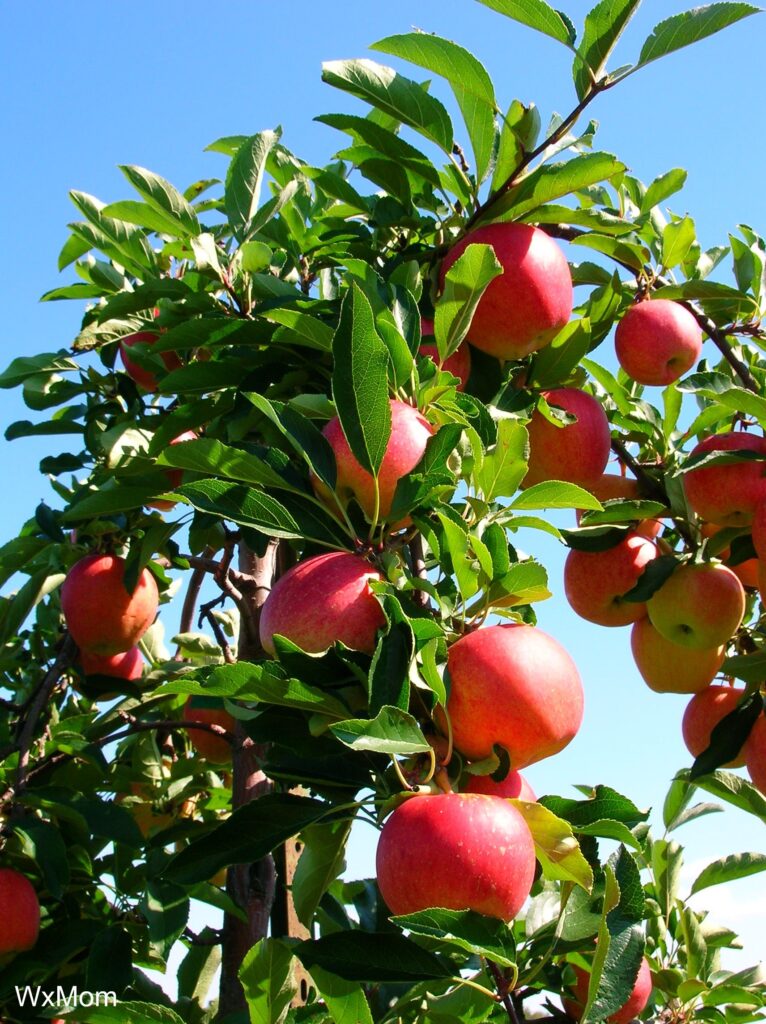
In the fall, produce shelves in local supermarkets brim with apples in all their variety. Recipes for apple pie, crisp, cake, and sauce start flowing. Some of these delicious efforts end up on kitchen tables and are devoured by appreciative families. Or forget baking and just toss fresh apple slices onto pancakes, into bowls of hot oatmeal, or in smoothies.
There’s only one thing that’s better than the apple bounty in stores: fresh apples from the tree. I’m lucky to be able to harvest bushels of fruit from my son’s and daughter-in-law’s tree. After peeling and slicing the fruit, I freeze bags of them for later use. The supply has lasted all winter long.
Originating in Kazakhstan and central Asia, apples are believed to be the oldest cultivated tree in the world. A few species of crab apples are native to North America. The discovery of ancient forest gardens provides evidence that the apple was an important food source for many Indigenous peoples.
In fruit trees, cold weather is an advantage. Canadian fruit has better colour and sweetness and fewer disease and insect problems compared to fruit grown elsewhere. Its health benefits are also enhanced by the cold. To protect themselves against extreme weather, plants produce more antioxidants. In their book, Growing Fruit in Northern Gardens, Bob Bors and Sara Williams note that, “what might be considered a superfood grown elsewhere becomes a super-duper food when grown in the north.”
The key to successful fruit trees is choosing varieties that thrive in your hardiness zone. This means going with a nursery that grows trees in our region. Since apples are typically grafted onto dwarf, disease-resistant, or hardy rootstock, this means checking the cold-hardiness of both the rootstock and the grafted scion. Choose a tree that is resistance to the fungal diseases and pests found in Simcoe region. These safeguards will ensure a healthy and productive tree for many years and will save the gardener both time and labour.
Choose a site in full sun. Apples are tolerant of most soils but do best in well drained, loam or sandy loam soil. Apply a thick layer of mulch in a ring around the tree ensuring that it does not touch the trunk. A newly planted apple or crab apple can take up to two years to establish and may take as long as five years to begin producing fruit. Once it does, trees can drop their fruit. To avoid problems, plant your tree away from decks, patios, driveways and sidewalks. Keep the base of the tree free from grass and other plants. Competition from other plants can slow or stunt the growth of a new apple tree.
For the first year or two, young trees need to be watered deeply at least twice a week during the growing season. Water new trees near the base but as the tree grows, water them at the dripline where the feeder roots are located. Do not fertilize newly planted trees. It is safe to apply 2 cm of compost or well-composted manure near the base of the tree before applying mulch.
Apples come in a variety of colours and sizes from small crab apples to large eating apples. The list of apples that offer excellent winter hardiness, disease resistance, flavour, and other characteristics is longer than you might expect. Depending on the cultivar, apples ripen anytime from late August to early October, an important feature to determine in advance.
For an article I wrote on hardy fruit trees, I interviewed some Canadian growers. Bob Osborne of Corn Hill Nurseries in New Brunswick recommends planting a total of three apple trees—one early apple and two cooking apples. One of his personal favourites is Frostbite (zone 3). For Phil Beauchamp at Beautiful Field Farm near Sudbury, ON (zone 3b/4), the vote for favourite apple goes to Gemini and Red Sparkle. He prefers these because of their large yields, extreme hardiness, and freedom from disease.
Decide on the number of apple trees you need to ensure pollination and a good harvest. Apples need to cross-pollinate with a tree of a different variety. All apple varieties have overlapping bloom times so any two varieties are compatible. Crab apples are often used for cross-pollination and they’re also excellent sources of pollen. (I’m not sure why stewed crab apple is not a more popular dessert. It’s simply a wonderful thing to eat.) Attract pollinating bees by having a diversity of flowering plants in your garden.
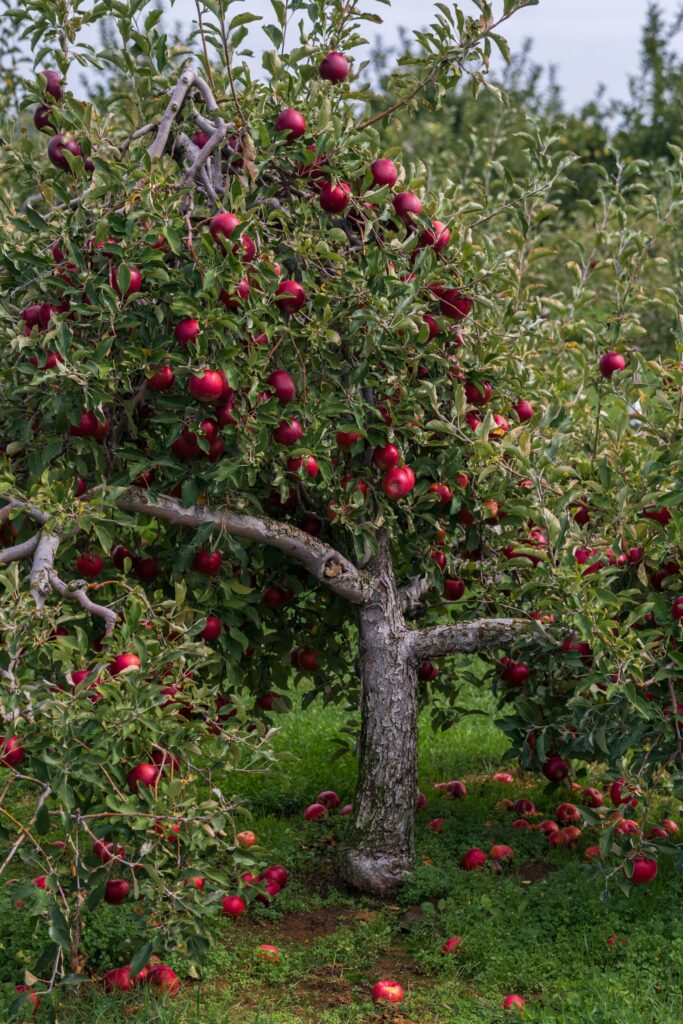
To do their best, apple trees require pruning for managing growth and optimal fruit production. Begin pruning your apple tree just after planting when its branches are flexible and easier to shape. Here is one effective method:
(1) Identify four to six strong and well placed main lateral branches growing more or less equally in four directions. These branches—known as the platform—are the ones that stay.
(2) Prune away all of the others that emerge from the main trunk.
(3) Cut back the leader branch so that it is 60–90 cm above the first platform.
(4) Repeat this procedure every year as new platforms develop. Removing weaker branches prevents the tree from directing energy to those limbs and instead allocates it to new shoots on its healthier limbs.
A Living Green Barrie volunteer since 2025, Cynthia Lauer, PhD is a member of Simcoe County Master Gardeners and a regular contributor to The Gardener magazine. Her work is AI-free.