

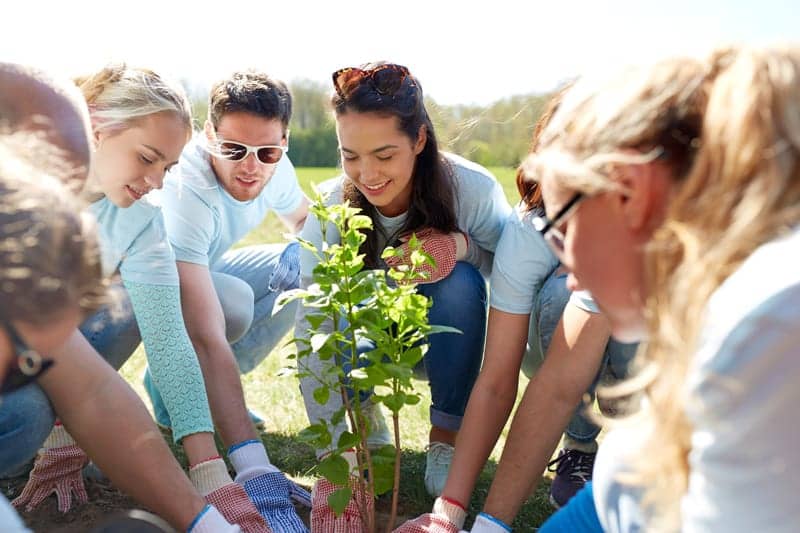
Planting a tree takes an afternoon. Keeping it alive takes about three years of light attention, and that is the part most trees lose on. This is what a young tree needs once it is in the ground.
If you have not planted it yet, start with how to plant your new tree, which covers choosing the spot, digging the hole and spreading the roots.
Choose the right tree for the space
Before anything else: match the tree to the place. Soil, sunlight and room to grow all matter, and so does what is overhead. A tree that will be 20 metres tall does not belong under a hydro line, and nothing you do later will fix that.
Water wisely
At planting, water thoroughly to settle the soil around the roots.
Through the first growing season, water deeply once or twice a week depending on the rain. Fifteen to twenty minutes with a hose running slowly is about right. A deep soak once a week beats a daily sprinkle, which only wets the surface and encourages roots to stay there.
Do not drown it. The soil should drain. Standing water around the roots will kill a tree as surely as drought.
Mulch, properly
Two to four inches of mulch over the root ball keeps moisture in and competing grass out. Keep it three inches clear of the trunk: piled against the bark it holds damp against the stem and invites rot and girdling roots.
There is a right and a wrong way to do this and the wrong way is common. See mulching a tree the right way.
Protect the trunk
Mulch is the first line of defence. A wide mulch ring keeps mowers and string trimmers away from the bark, and trimmer damage around the base is one of the commonest ways a young tree dies slowly.
Trunk guards go on in the fall, once the tree has stopped growing for the season, and come off in early spring after the last hard frost but before the bark expands with the warmer weather. They are there to stop sunscald and to keep deer from rubbing and rodents from chewing through the winter.
Staking is not automatic. Most young trees do not need it, and staking one that does not weakens the trunk. See staking trees.
Through the year
- Spring — look for new growth, and cut out anything the winter broke.
- Summer — water through dry spells. This is when a two-year-old tree is most likely to be lost.
- Fall — keep watering until the ground freezes, so the roots go into winter hydrated. Put the trunk guard on.
- Winter — mulch in late fall to insulate the roots, and stay off the frozen ground near the tree so you are not compacting the soil its roots are in.
Where to get help in Barrie
- Simcoe County Master Gardeners run workshops and answer questions about planting and care.
- Barrie Public Library holds reference material on local species and gardening.
- The City of Barrie publishes guidance on urban forestry and street trees.
- An ISA Certified Arborist is who to call for anything involving a ladder, a chainsaw or a tree you are worried about.
Planting a tree? Tag us on Instagram and Facebook. We like seeing them.