
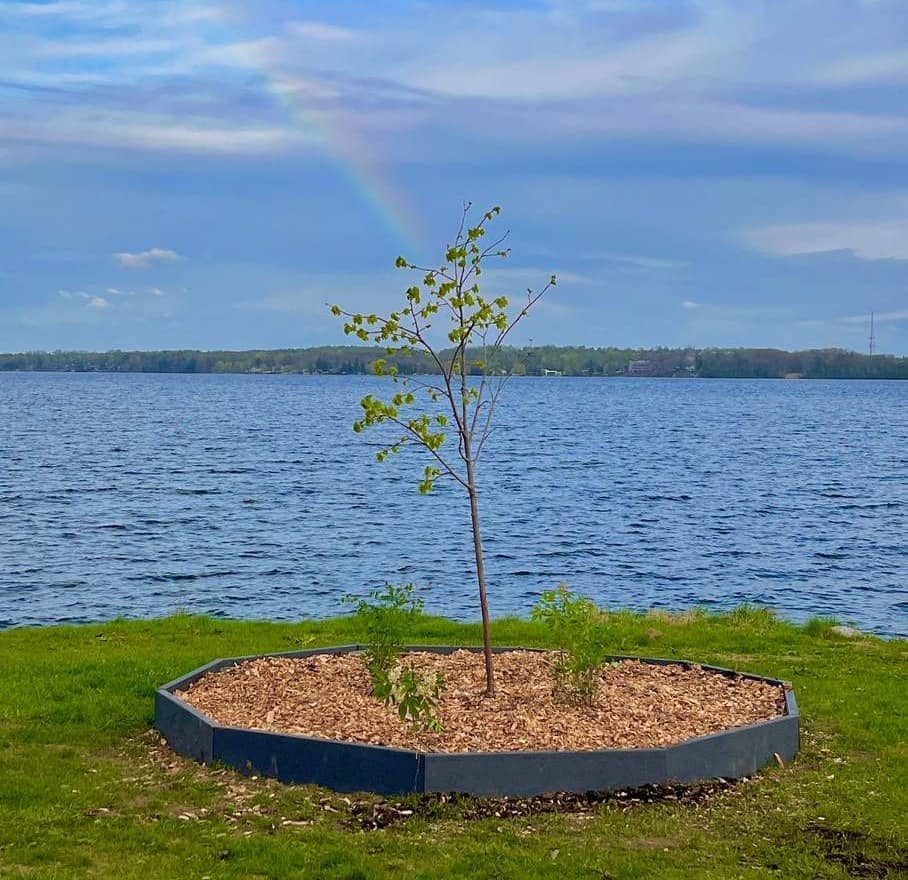
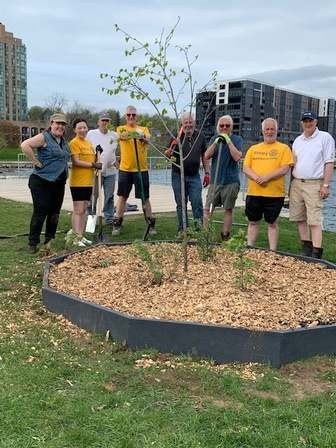
A Trees for Bees pod is a native tree with pollinator plants growing at its feet, inside a hexagonal frame of recycled plastic lumber. It is a simple thing to build, and it does three jobs at once: it keeps the tree alive, it gives bees, butterflies and birds somewhere to feed, and it puts Barrie’s own plastic waste to work holding the whole thing together.
The frame keeps the tree alive
A tree planted straight into mown grass has a hard time reaching maturity, and usually for reasons nobody watches happen.
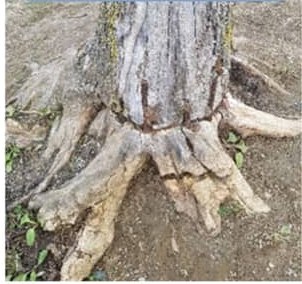
Mowers, vehicles and feet compact the soil until roots cannot spread through it or draw water from it. The grass competes for whatever moisture is left, and a young tree needs more water and more mulch than a lawn will spare it. Mowers and string trimmers strip bark from the foot of the trunk, a little each season, until the tree is girdled and dies — slowly enough that nothing connects it back to the machine. On top of all that sit the ordinary urban stresses: road salt, drought, pollution and pests.
The frame answers most of this at once. Inside it the ground is mulched rather than mown, so the soil stays open and holds its water, and nothing with a blade comes near the trunk.
Planting that does not get tidied away
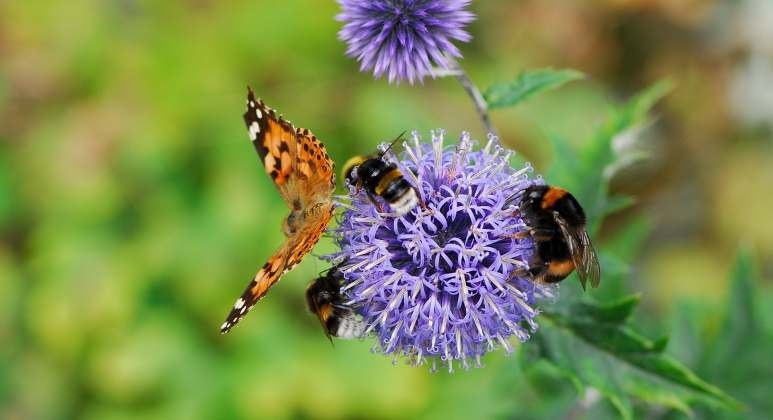
Naturalized planting is hard to keep in a public park. These are exactly the places bees, butterflies and birds need, and they are usually the first thing to go: left to grow, native planting reads as weedy and unkempt to anyone who was not told it was planted on purpose, and sooner or later somebody tidies it away.
A frame settles that argument before it starts. It is an unmistakable edge — this was deliberate, stop the mower here — so a habitat patch and a trim lawn can sit side by side without either having to win.
The trees are chosen for what they feed. Tulip tree, red maple, basswood, black cherry and redbud all carry high ecological value, offering flowers, berries and seed to pollinators and other wildlife across the year.
Made in Barrie, from Barrie’s plastic
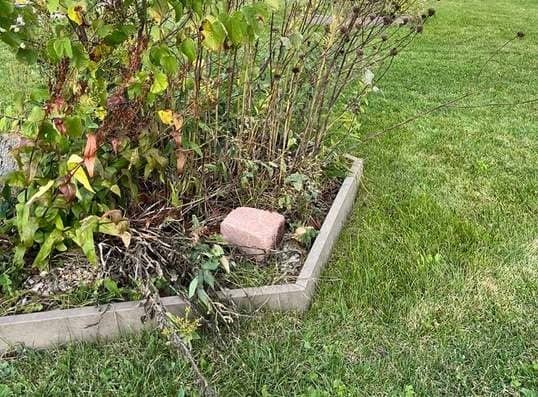
The frames are recycled plastic lumber from GreenWell Plastics, a Barrie company that has diverted 2.5 million pounds of difficult-to-recycle material from landfill and turned it into something durable. They took Green Business of the Year at our Green Business Awards in 2023.
They are not pressure-treated wood, and that matters twice over. Treated timber leaches its chemicals into groundwater, and it rots, so in time it has to be replaced. Recycled plastic lumber does neither, so a pod asks very little of anyone once it is in the ground.
Where the pods are
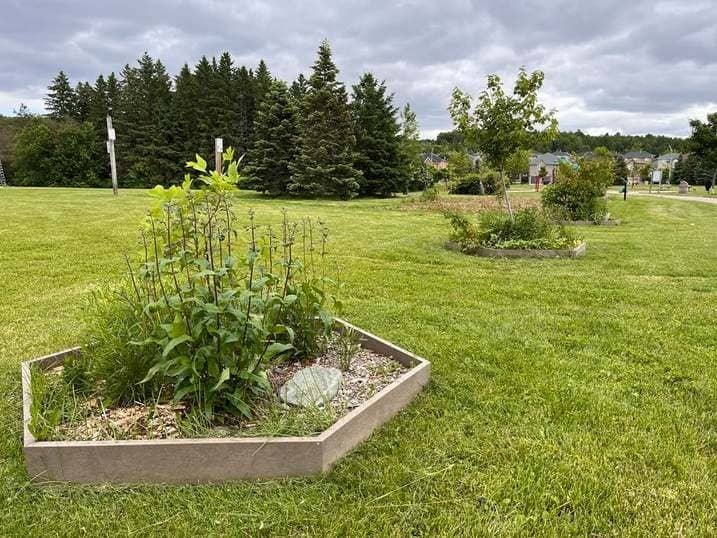
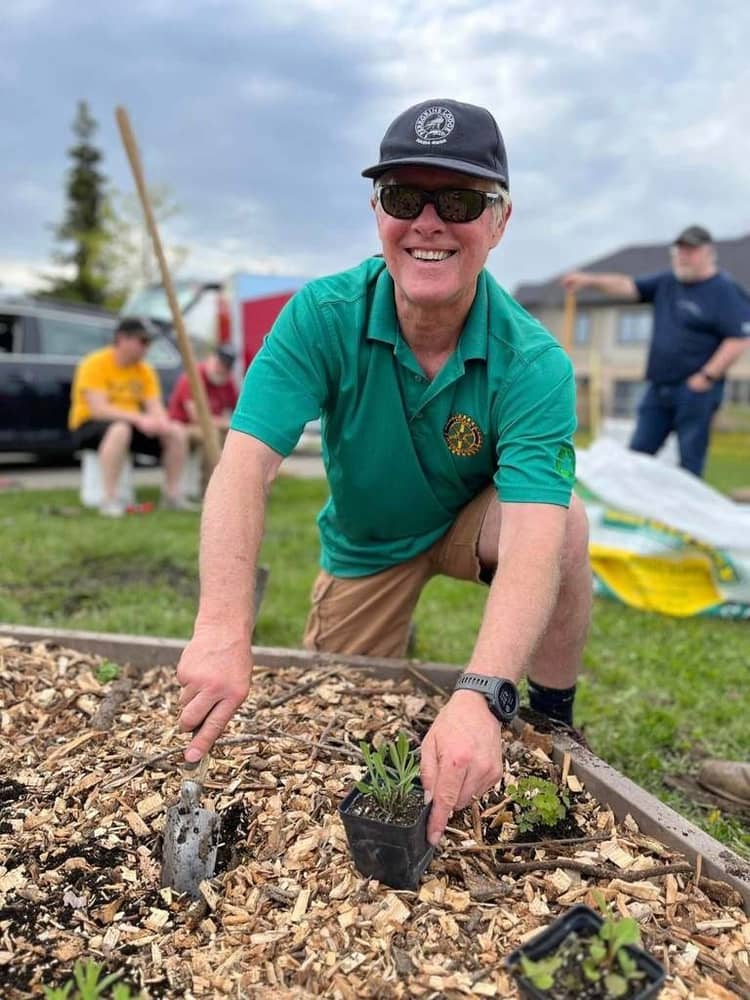
The first three pods went into Grzegorz “Greg” Pierzchala Park — formerly Batteaux Park — in 2023, installed by the Rotary Club of Barrie-Huronia. Pollinate Barrie, a volunteer, community-led group working to create and sustain native pollinator habitat across the city, chose and supplied the plants.
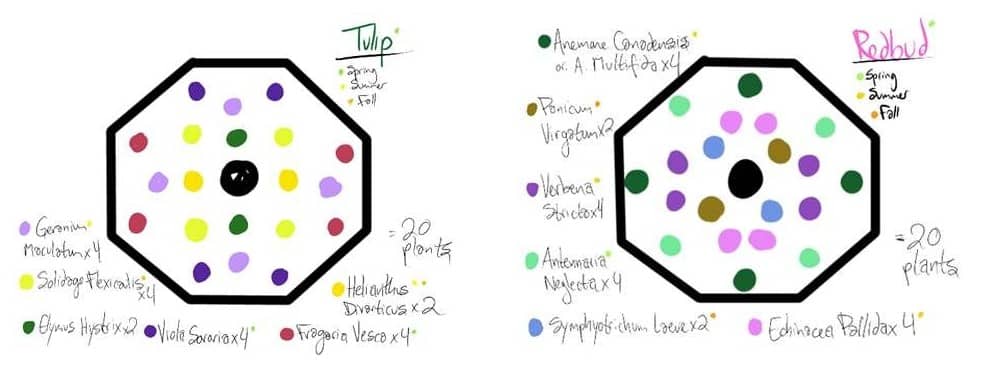
Each pod is one tree with about twenty plants around it.
Tulip tree (Liriodendron tulipifera) — wild geranium, zig-zag goldenrod, bottlebrush grass, blue violet, woodland sunflower and wild strawberry.
Eastern redbud (Cercis canadensis) — Canada anemone, switchgrass, hoary vervain, field pussytoes, smooth aster and purple coneflower.
Four more went in during 2025: two at Georgian College with the Rotary Club of Barrie, and two larger pods beside the fishing platform at Heritage Park with the Rotary Club of Barrie-Huronia.

Ask about a pod
Email ••••@•••••••••••••••• and we will talk it through with you.
Pods are not available to individual homeowners yet. Our intent is to make them widely available to everyone once our capacity to deliver and install them increases.
The same material is also a slide deck (PDF), if you need something to present.