10,000
Trees Planted

By Cynthia Lauer
It’s easy to love a tree in the spring, in the summer, in the fall. We love them for their size, their foliage, their shade, and the birds they house. Trees also protect us from the wind, soil erosion, floods, and extreme temperatures.
But what is there to love about a tree in the winter? From an environmental point of view, a lot!
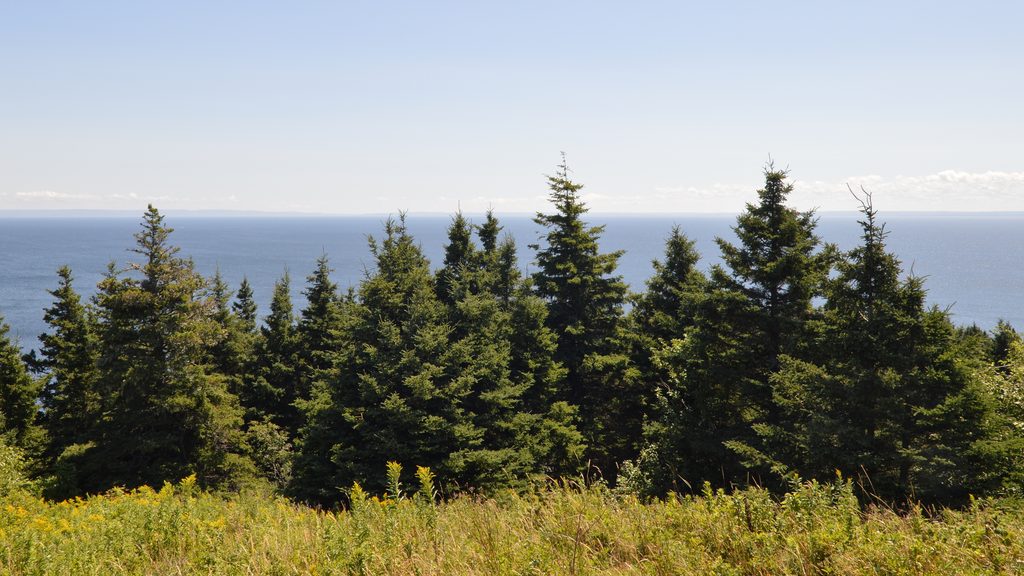
Winter doesn’t stop trees from performing ecosystem services like soil stabilization, water management, and temperature regulation. When planted in rows, spruces, pines, and other evergreens act as windbreaks. Without a windbreak, homes may be colder and drier from winter breezes, and snow can more easily pile up around a building, blocking passages and entrances or causing water damage as it melts and freezes. Bushy evergreens that block wind can also collect rain and snow, keeping a portion of the moisture away from buildings. This also helps the tree since this moisture ends up in the ground and is absorbed by the roots.
Winter Trees as Animal Habitat
The most conspicuous contribution that trees make to the winter environment is habitat for birds and mammals. These environmental services are particularly valuable during the harsh winter months when resources are scarce.
Hibernating animals like chipmunks, ground squirrels, snakes, groundhogs, and woodchucks dig out small dens and burrows under tree roots, logs, and inside hollow tree trunks. Some bats also find winter shelter in a small hole or tree cavity. Non-hibernating mammals like foxes and rabbits make their winter homes in dormant trees or under the dense foliage of evergreen trees like pines or junipers. Trees also protect non-migratory birds like woodpeckers, owls, jays, cardinals, chickadees, pheasants, doves, and many other species.
Some overwintering animals survive on foraging. Deer and rabbits eat bark, twigs, buds, nuts, acorns, and winter foliage and berries. Some of the trees listed below retain their berries into the winter months, providing an essential food source to non-migratory birds. Birds like woodpeckers also find insect larvae in trees or under logs in the winter, while animals like coyotes, foxes, and owls hunt for small mammals and insects in the winter just as they do in the warmer months. Owls can be heard in the cold winter air hooting from their roost in an evergreen.
Evergreen tree needles, twigs, bark, and seeds contained in the cones provide nourishment for wildlife. Chipmunks and squirrels enjoy eating the seeds of pinecones. Deer and black bears sometimes enjoy a snack of tree bark. Stands of coniferous trees provide areas for deer to rest and eat. The coniferous canopy helps the deer by reducing wind chill and creates an insulated ceiling when snow builds up on tree branches. This leaves the forest floor easier for deer to walk around the understory.
Here is a list of some excellent trees and shrubs for winter food and shelter:
SHRUBS
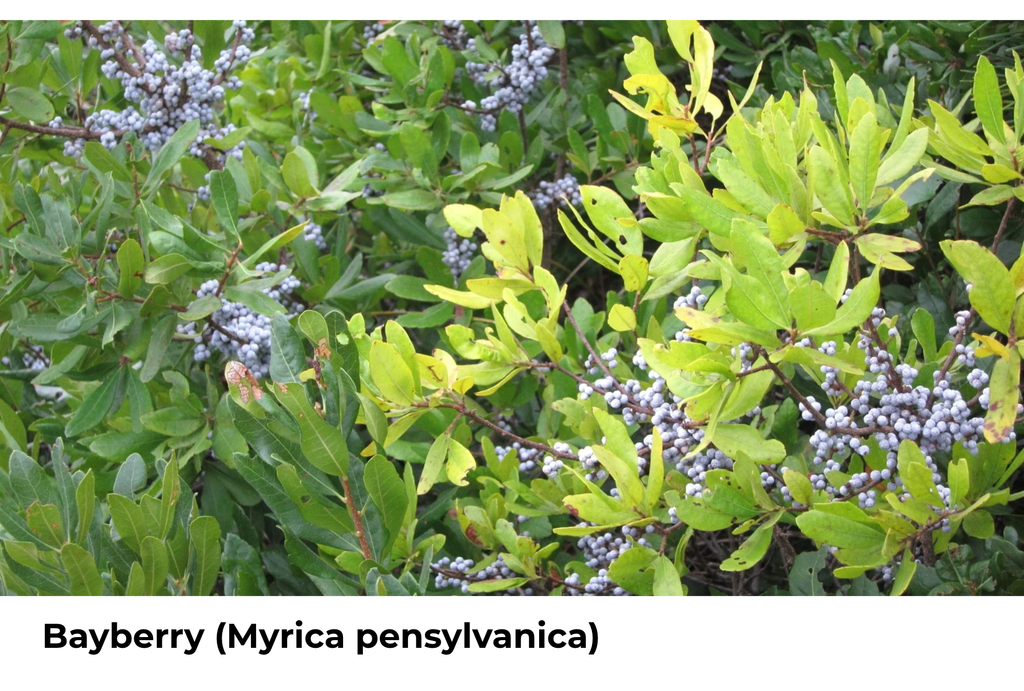
Bayberry (Myrica pensylvanica)
This semi-evergreen shrub has dense branching and foliage that persists into the winter, which wildlife can use for shelter. The fruit also remains on the branches throughout the winter season providing a food source for birds like grosbeaks and black-capped chickadees. For fruit production, homeowners should plant two or more shrubs since male and female flowers are generally found on separate shrubs.
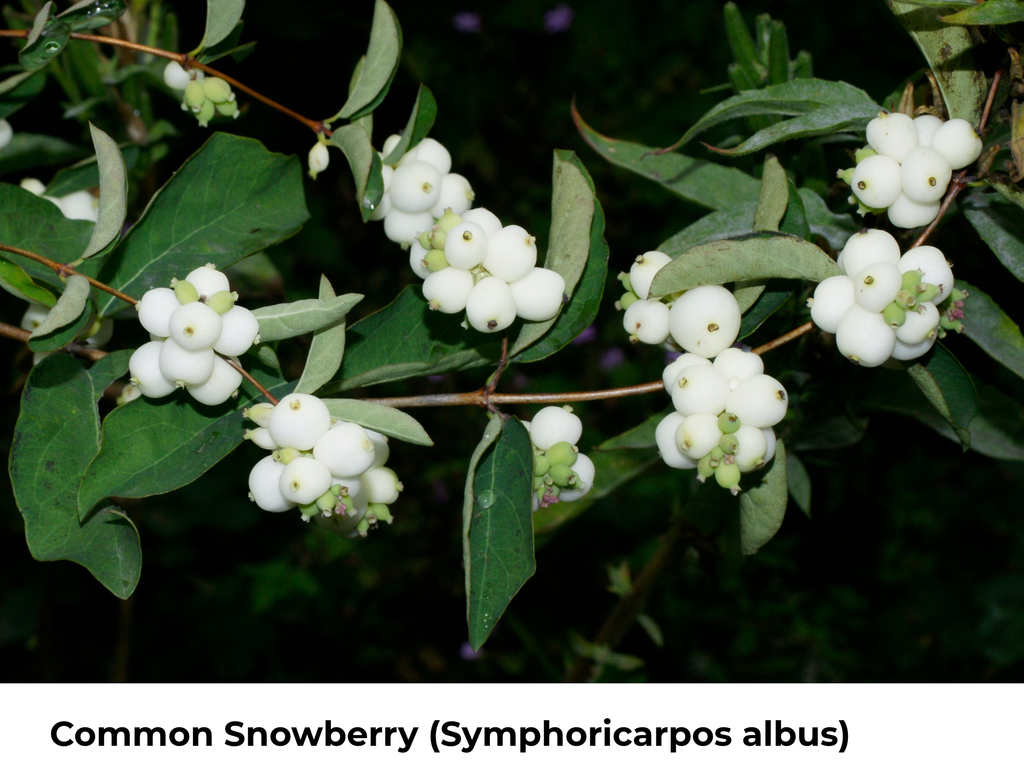
Common Snowberry (Symphoricarpos albus)
This shrub is named for its white berries that ripen in early fall and persist into winter; they are a food source for chipmunks and overwintering birds like robins and thrushes. When grown as a thicket, the spreading branches of this shrub can provide important winter cover for these animals while they enjoy its fruit. The snowberry can grow in a range of soil and sunlight conditions. Its small size makes it suitable for most backyards.
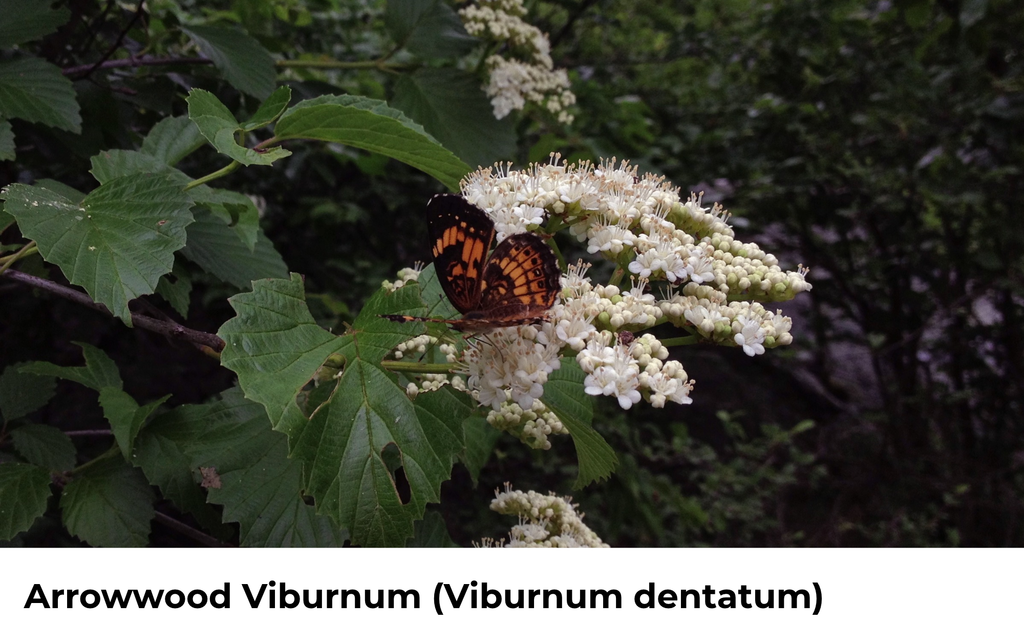
Arrowwood Viburnum (Viburnum dentatum)
Like all viburnums, the arrowwood viburnum is a hardy and showy shrub that complements any garden. I planted no fewer than eight of them in my large garden, four in inhospitably dry spots by the house foundation. Despite the poor growing conditions, these shrubs are thriving. Clusters of creamy white flowers appear in late spring followed by blue-black berries in summer that persist into winter. The fall brings out yellow, red, or purplish foliage. In the winter, small mammals and birds eat the berries while the dense branches serve as a refuge for wildlife.
DECIDUOUS TREES
Bur Oak (Quercus macrocarpa)
The bur oak is a large-growing tree that provides shade and privacy for homeowners and ample shelter for wildlife even in the winter, especially in a year when it holds onto its leaves. The acorns of this oak are jam-packed with nutrients and persist on the tree into the winter making them a popular food source among birds and mammals like squirrels and deer.
Hackberry (Celtis occidentalis)
This tree is an important food source for small mammals and birds because its small, black, sweet fruit remains on the tree throughout the winter. Cedar waxwings, robins, cardinals and other birds enjoy these late-season fruits. The hackberry can tolerate compacted clay soil and is a great choice for property owners living in new developments. Often overlooked as a valuable landscaping tree, the hackberry is so valuable that I planted two of them.
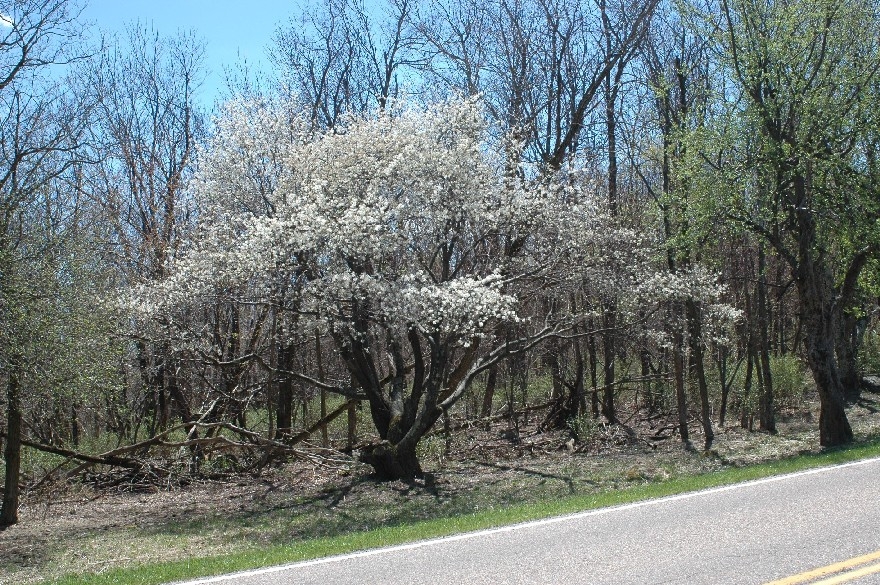
Downy Serviceberry (Amelanchier arborea)
Serviceberry is a favourite of Canadian gardeners and is often recommended by master gardeners to people seeking a small native landscape tree. It is beautiful in all seasons including the winter when its delicate and complicated branch structure glistens with snow and ice. With its white flowers in the spring, red berries in the summer, and vivid foliage colours in the fall, this tree has it all. The fruit is popular among birds and humans alike.
EVERGREEN TREES
Eastern White Cedar (Thuja occidentalis)
The year-round foliage of this small evergreen tree offers wildlife refuge from the harsh winter weather and from predators, especially when they are planted in a hedgerow. This tree produces cones in the spring which release seeds in the fall over a period of several months. The seeds are an attractive food source for overwintering finches including the goldfinch. The eastern white cedar is ideal for property owners looking to create privacy in a natural way.
White Spruce (Picea glauca)
This large evergreen tree has year-round foliage thick enough to hide and protect a variety of wildlife from predators and winter weather. The cones of this tree open up and shed seeds throughout the winter months making it a great food source for seed-eating birds and squirrels. The white spruce is an ideal choice for homeowners looking for year-round greenery and to create a windbreak on their property. A handsome tree in the landscape, it functions well as a specimen or in a grouping. It attracts crossbills, evening grosbeaks, red-breasted nuthatches, grouse, rabbits, and deer.
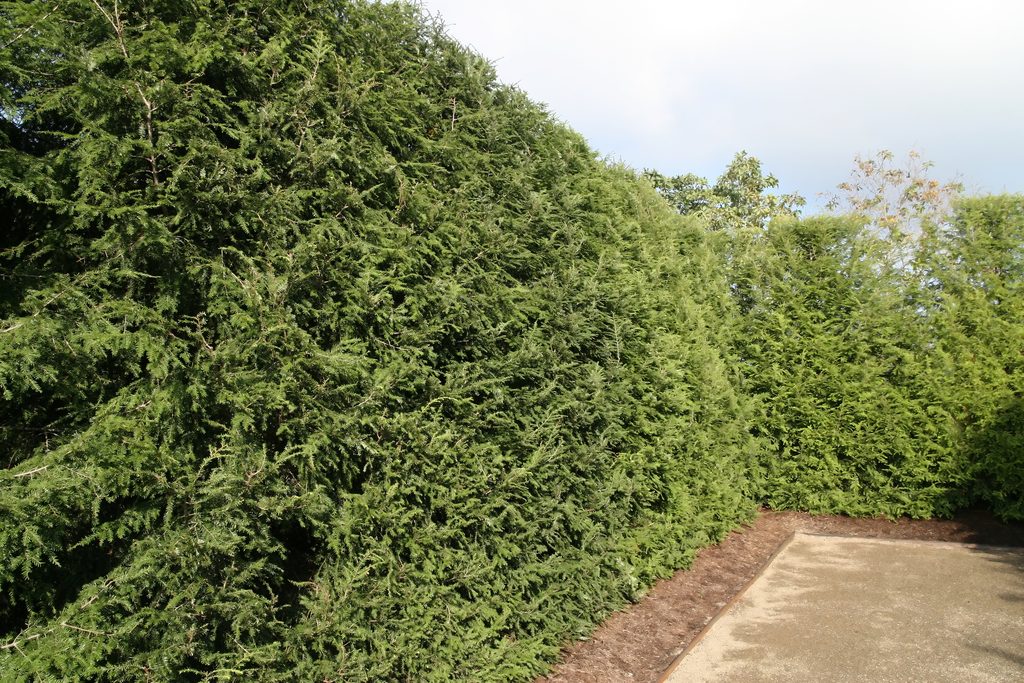
Canadian Hemlock (Tsuga canadensis)
Excellent for privacy screens and hedges, the Canadian hemlock is a graceful evergreen that can be sheared to any height or shape. It is one of the only evergreens that can handle full shade although it prefers a site where it can receive both shade and sun. Use it as a landscape tree, along the fence line, in a woodland, or as a foundation shrub. It attracts warblers, juncos, chickadees, and siskins.
A Living Green Barrie volunteer since 2025, Cynthia Lauer, PhD is a member of Simcoe County Master Gardeners and a regular contributor to The Gardener magazine. Her work is AI-free.