

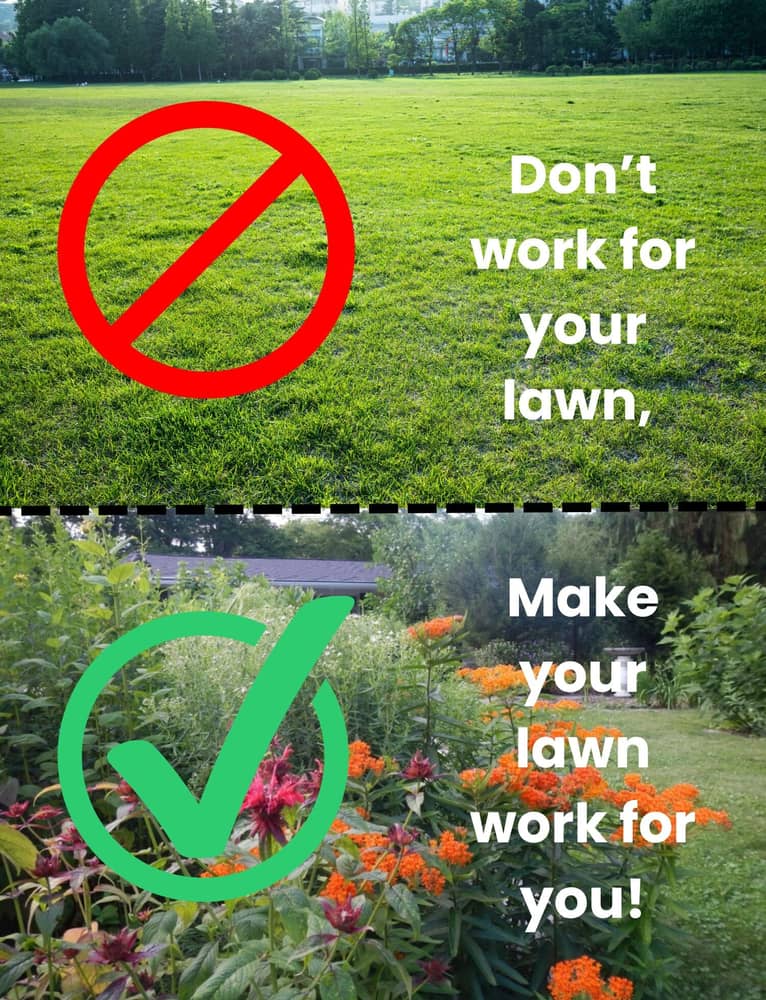
Plenty of people in Barrie are shifting away from a lawn and towards something that supports wildlife, uses less water and takes less work. You do not have to dig the whole thing up to start.
Let the leaves be
The single easiest thing you can do for local wildlife is to stop bagging your leaves. Rake them into garden beds or simply leave them where they fall.
Leaf litter is where a great many pollinators spend the winter: bees and butterflies overwinter in it, and taking it to the curb takes them with it. The leaves also feed the soil as they break down, and hold moisture in it. As the Xerces Society puts it, leaves are habitat, not trash.
Keep the old stumps and dead wood
A stump or a fallen limb looks untidy and is doing a great deal of work. Cavity-nesting bees nest in dead wood, and a long list of insects and fungi depend on it.
Rather than clearing it, leave it where it is or build it into the design. It gives a garden a bit of character as well.
Plant for pollinators
Native plants are the ones our local pollinators can actually use, because they are the ones they evolved alongside. Good starting points for Ontario:
- Swamp milkweed — the monarch’s host plant.
- Wild bergamot — bees and hummingbirds both.
- Black-eyed Susan — hardy, cheerful and useful to a wide range of pollinators.
- Purple coneflower — tough, long-flowering, popular.
The 3 × 3 × 3 system
If you want a structure to work to: plant three species that bloom in spring, three in summer and three in fall. That gives pollinators food across the whole season rather than a glut in July and nothing either side of it.
Where to start
Pick one bed. Do that, see how it looks, and extend it next year. Nobody naturalizes a yard in a weekend, and the gradual version is the one that actually happens.
- Gardening with native plants — what to plant, and where to buy it
- Decolonizing your yard, and why it matters — where the lawn came from in the first place
- Our native tree and shrub store sells locally grown native species