

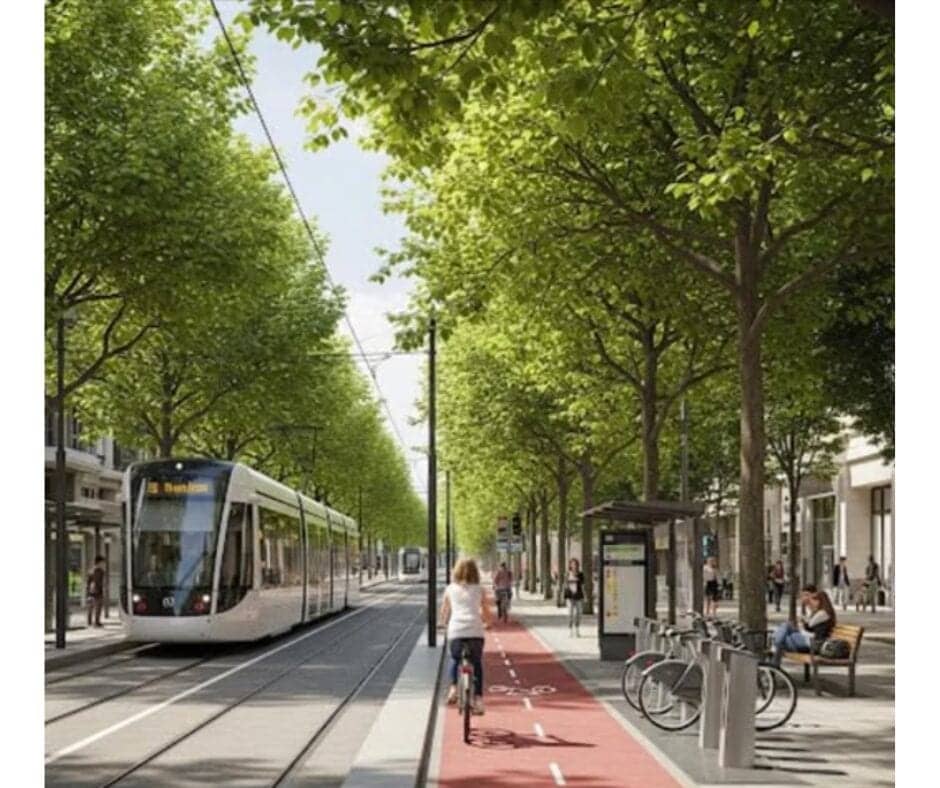
Getting around is ordinary life: work, school, the grocery store. It is also one of the biggest levers we have. In Ontario, transportation accounts for nearly a third of greenhouse gas emissions, and in Barrie private vehicles are the largest single source of them.
The good news is that travelling differently is not a sacrifice. It improves health, it makes streets safer, and it puts people back on the street where they can see each other.
What is active transportation?
Any human-powered travel: walking, cycling, rolling, or using a mobility aid. Low impact by definition, and good for you on the way.
In Barrie it is getting attention. The City’s Active Transportation and Sustainability Committee has pushed cycling infrastructure, safe pedestrian routes and better connections to transit as the ways to make the city greener and easier to move around.
Why it is worth doing
- Fewer emissions. Walking, cycling and rolling produce none at all, and even transit is a large cut against driving alone.
- Better health. Active travel is exercise you do not have to schedule. It lowers stress, helps your heart and lifts your mood.
- A better neighbourhood. Streets with people walking and cycling on them feel friendlier and safer.
- Money saved. Fewer car trips means less fuel, less maintenance and less parking.
Six ways to tread lightly here
1. Walk where you can. For trips under 2 km, consider walking. In denser parts of the city, Downtown Barrie and Allandale especially, a lot of errands are easily done on foot.
2. Cycle the medium distances. Barrie’s cycling network is expanding, including bike lanes and trails like the Waterfront Trail and the Barrie-Collingwood Rail Trail.
3. Take transit. Barrie Transit connects the main neighbourhoods and the GO stations. Buses carry bike racks, so cycling and transit together cover longer trips without a car.
4. Carpool, and share rides sensibly. When driving is necessary, share it. Apps and community boards make organizing it straightforward.
5. Plan ahead. Combine errands into one trip rather than several short drives. Saves time, fuel and emissions together.
6. Make it social. A walk or a ride with family or friends is easier to keep up than one you have to talk yourself into.
A community shift
Barrie’s Transportation Master Plan is explicit about reducing dependence on single-occupancy vehicles. Meeting that means a cultural change as much as an infrastructure one: making walking, cycling, rolling and transit the default rather than the alternative.
Other Ontario communities are showing what that looks like, from Toronto’s Vision Zero road safety plan to Guelph’s cycling master plan. Barrie is well placed to follow as the infrastructure improves and residents keep asking for it.
Every step and every pedal stroke counts. Choosing active transportation even a few times a week cuts emissions, improves health and builds a more connected city. Next time you are heading out, ask yourself: can I tread a little more lightly today?
- Ten electric vehicle myths, busted
- The Barrie Bicycle Poker Ride
- Tread Lightly, our June climate action